

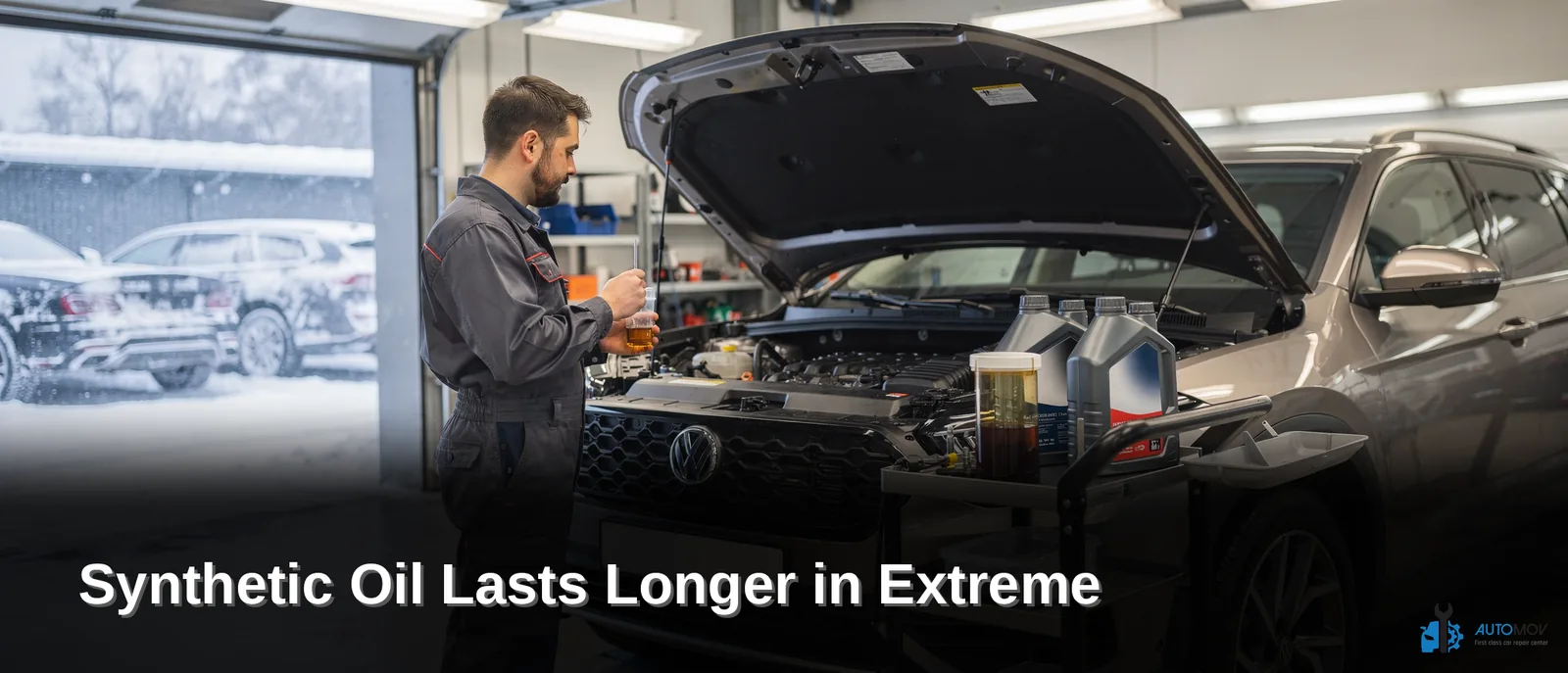
Molecular Stability: Synthetic oil resists thickening in freezing conditions and breakdown under high heat, unlike conventional oil, which thickens and struggles to circulate as temperatures drop. Mobil 1 Lube Express, headquartered in Parsippany, NJ, relies on this consistent viscosity to deliver reliable engine protection across extreme summer and winter temperatures alike.
Synthetic motor oil, such as Mobil 1, resists thickening in freezing winter temperatures and breaking down under extreme summer heat. Unlike conventional oil, it flows quickly at startup, reduces engine wear during cold mornings, and maintains stable viscosity when temperatures spike, delivering consistent protection across seasonal extremes that conventional oils cannot match.
- Synthetic oils maintain proper viscosity at extreme temperatures, unlike conventional oils that thicken in cold weather.
- Mobil 1 Lube Express in Parsippany, NJ specializes in synthetic oil formulations for temperature protection.
- Synthetic formulations resist breakdown under high summer heat, preventing engine damage from thermal stress.
- Cold starts require oils that flow instantly; synthetics circulate 5 times faster than conventional oils.
How Does Cold Weather Stress Engine Oil?
Cold temperatures thicken conventional oil, slowing its flow through the engine at the exact moment lubrication matters most. Startup becomes a gamble in freezing weather. Metal components grind against each other before oil reaches them. That gap between ignition and full circulation causes measurable wear over time.
Drivers who understand why synthetic oil lasts longer in winter conditions grasp a simple mechanical reality: conventional oils struggle to circulate properly when temperatures drop, leaving critical engine parts exposed during those first vulnerable moments after ignition. Synthetic formulations behave differently under the same conditions. Engineered specifically to protect against freezing temperatures, synthetic lubricants maintain a more consistent flow rate than conventional oil, even as the mercury falls.
Why Does Oil Thickness Matter at Startup?
Thick oil moves slowly. During the first seconds after a cold start, an engine relies on oil reaching pistons, bearings, and camshafts almost instantly. Conventional oil often can’t keep pace in freezing weather, which increases friction and accelerates component wear.
Preventative maintenance built around the correct oil grade addresses this problem directly. Selecting the right formulation supports reliability and long-term engine protection through the coldest months, rather than leaving performance to chance.
Three winter stress points deserve attention:
- Startup lubrication delay — thickened oil slows circulation to critical parts
- Cold-start wear — metal components run dry longer before full protection kicks in
- Viscosity breakdown — conventional oils lose consistency as temperatures swing
Mobil 1 Lube Express addresses these risks with Mobil 1 synthetic oil changes, one of the core services built to extend engine life through seasonal extremes. Technicians match oil grade to the demands of North Jersey winters, giving engines a fighting chance the moment the key turns.
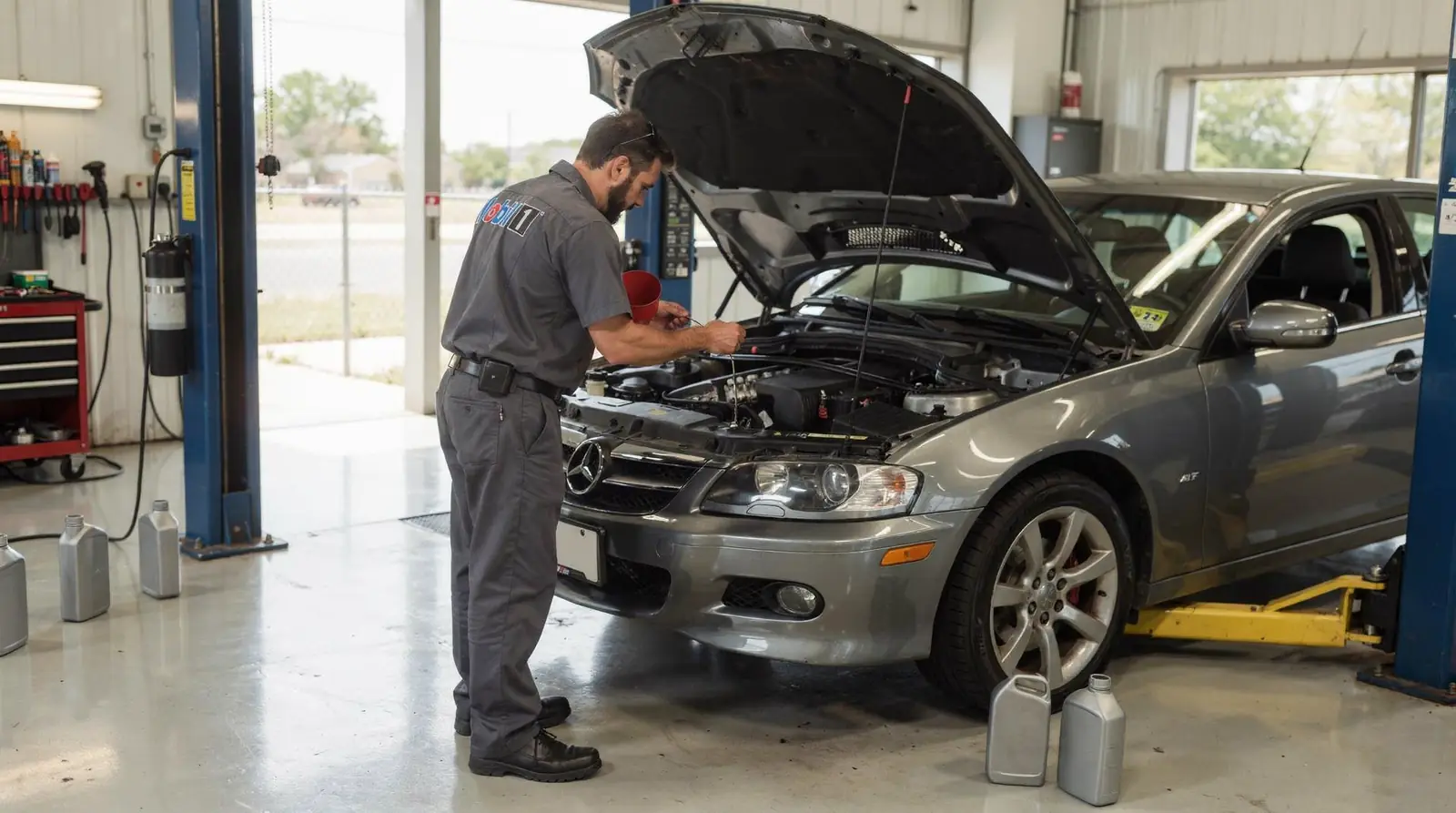
Why Does Summer Heat Break Down Oil Faster?
Extreme heat forces engine oil to work harder than it does in any other season. Rising temperatures thicken the surrounding air, place extra strain on the cooling system, and push oil into overtime duty just to keep metal parts separated. Under a blazing sun or during stop-and-go traffic on hot asphalt, an engine’s internal components generate far more friction than on a mild spring afternoon.
Oil that isn’t built for these conditions starts to break down. When the wrong type circulates through a hot engine, it degrades faster, loses its ability to lubricate, and lets wear accelerate on pistons, bearings, and camshafts. That breakdown compounds over time, shortening the life of parts that are expensive to replace.
Does Synthetic Oil Really Hold Up Better in Heat?
Synthetic formulas resist thermal breakdown more effectively than conventional oils, which is part of why synthetic oil lasts longer under summer stress. A stable molecular structure helps synthetic blends maintain viscosity and coating strength even as underhood temperatures climb.
Mobil 1 Lube Express pairs Mobil 1 products with technician-applied service built specifically around these heat-resistant lubrication needs. That combination matters most when engines face:
- Prolonged highway driving in 90°F-plus conditions
- Stop-and-go traffic that traps heat under the hood
- Towing or heavy loads that increase friction and oil temperature
Full synthetic oil service at Mobil 1 Lube Express is designed to help a vehicle perform consistently across driving conditions, summer heat included. Skipping a seasonal check doesn’t just risk a breakdown on a hot highway shoulder — it risks quietly wearing down an engine from the inside, long before any dashboard light appears.
Why Synthetic Oil Lasts Longer in Extreme Heat?
High summer temperatures push engine oil past its breaking point fast. Molecular design explains why synthetic oil lasts longer than conventional formulas once the thermometer climbs. Conventional oil molecules vary in size and structure, so weak spots form under stress. Synthetic oil molecules are engineered uniformly, giving them a higher tolerance before breakdown occurs.
Lower volatility plays a major role in this durability. Synthetic formulas resist evaporation better than conventional oils, which keeps oil consumption steady even during long highway drives or stop-and-go summer traffic. Less evaporation means fewer top-offs and a lower risk of running low on protection mid-trip.
Does synthetic oil really resist heat breakdown better?
Yes. Synthetic oil molecules withstand higher temperatures before their structure starts to degrade. Conventional oil thins and breaks down sooner, leaving critical engine components exposed to friction. That gap becomes especially important during peak summer months, when underhood conditions push oil to its limits repeatedly.
| Factor | Conventional Oil | Synthetic Oil |
|---|---|---|
| Volatility (evaporation risk) | Higher | Lower |
| Heat tolerance before breakdown | Lower | Higher |
| Consumption under stress | Increases faster | Stays more controlled |
Mobil 1 Lube Express stocks full synthetic oil built around exactly this kind of temperature-driven protection, along with high-mileage formulas for older engines facing added wear. Choosing the right formula matters, but consistency matters just as much.
Why does regular synthetic oil use matter for long-term engine health?
Switching to synthetic oil once will not undo months of heat stress on an aging engine. Consistent use of quality synthetic products builds long-lasting performance over repeated summer and winter cycles. Technicians at Mobil 1 Lube Express pair every fill-up with product guidance suited to each vehicle’s mileage and driving conditions. Protection compounds over time rather than resetting with every visit.
Does Synthetic Oil Really Lower Engine Temperatures?
A thermostat, not the oil in the crankcase, sets an engine’s operating temperature. Synthetic formulas withstand higher heat than conventional oils. Changing the oil type does not shift the number on the temperature gauge.
Why do some engines rely on synthetic oil instead of a cooler?
Automakers have used synthetic oil in high-heat engine bays as a substitute for extra cooling hardware. Chevrolet chose this route for the 1997-2004 Corvette lineup, since synthetic oil cost less than installing an oil cooler. The strategy worked because synthetic oil resists breakdown at temperatures that would degrade conventional oil, protecting components even without added cooling equipment.
So what actually protects an engine through heat swings?
Consistent maintenance protects an engine more than the oil formula alone. Mobil 1 Lube Express focuses on synthetic oil that lasts longer paired with routine fluid checks. Inspections, a combination that shields engines through both winter freezes and summer heat spikes. Parsippany, NJ drivers face both extremes in the same calendar year, making that consistency valuable.
Three factors matter more than oil type for underhood heat:
- Thermostat function — regulates coolant flow and sets the operating range.
- Cooling system condition — radiator, hoses, and coolant levels affect heat dissipation.
- Oil quality — determines how well lubrication holds up once temperatures climb, not how low they run.
Engine temperature stays largely out of the oil’s control. What synthetic oil does control is how well the engine survives whatever temperature it reaches, which is why scheduled changes remain part of a sound maintenance routine.
What Should Parsippany Drivers Do Next?
Scheduling a seasonal oil change stands as the clearest next step for area drivers. Mobil 1 Lube Express sits on Route 46 in Parsippany, offering Mobil 1 synthetic oil changes built to extend engine life through both frozen January mornings and sweltering July commutes. Winter thickens conventional oil until it barely circulates; summer heat breaks it down faster than most drivers realize. A synthetic formula resists both extremes, which explains why synthetic oil lasts longer than conventional oil across seasonal swings.
Drivers throughout Parsippany, Morris Plains, Denville, East Hanover, Montville, Rockaway, and Randolph can bring their vehicles in for Mobil 1 products applied in a clean, efficient setting. That regional reach matters because seasonal stress on engines doesn’t stop at town lines. Every commuter on Route 46 faces the same freeze-thaw and heat-cycle wear.
How Often Should Drivers Get Seasonal Maintenance Checks?
Preventative visits timed around seasonal shifts help maintain reliability and fuel efficiency year-round. Checking oil condition before winter’s cold snaps and before summer’s peak heat catches problems before they become breakdowns.
What Happens During a Visit?
Technicians review the vehicle’s current oil grade against seasonal driving conditions. Recommendations stay honest and straightforward, paired with quick turnaround:
- Oil grade suited to upcoming weather extremes
- Fluid and filter condition checks
- Quick, transparent service recommendations
Contacting the shop directly confirms current scheduling and service details.
Synthetic oil’s superior molecular stability makes it the smart choice for drivers facing extreme temperature swings. Whether your engine battles scorching summer heat or freezing winter cold, synthetic formulations maintain consistent protection and flow when conventional oils falter. By choosing synthetic oil changes at Mobil 1 Lube Express, you invest in your vehicle’s longevity and reliable performance across every season, ensuring your engine stays protected when it matters most.
FAQ
Why does synthetic oil resist breakdown in extreme heat?
Synthetic oil’s molecular stability allows it to withstand thermal stress that causes conventional oil to break down, maintaining consistent viscosity even as summer temperatures spike and place extra strain on the engine.
How does synthetic oil perform better during cold starts?
Synthetic oil circulates five times faster than conventional oil at startup, reaching pistons, bearings, and camshafts almost instantly and reducing the wear that occurs when metal components run dry in freezing conditions.
Where does Mobil 1 Lube Express provide synthetic oil services?
Mobil 1 Lube Express operates in Parsippany, NJ. Technicians match oil grade to seasonal demands. Perform Mobil 1 synthetic oil changes to extend engine life through extreme temperature swings.
Facts
- Mobil 1 Lube Express is located in Parsippany, NJ, United States.