

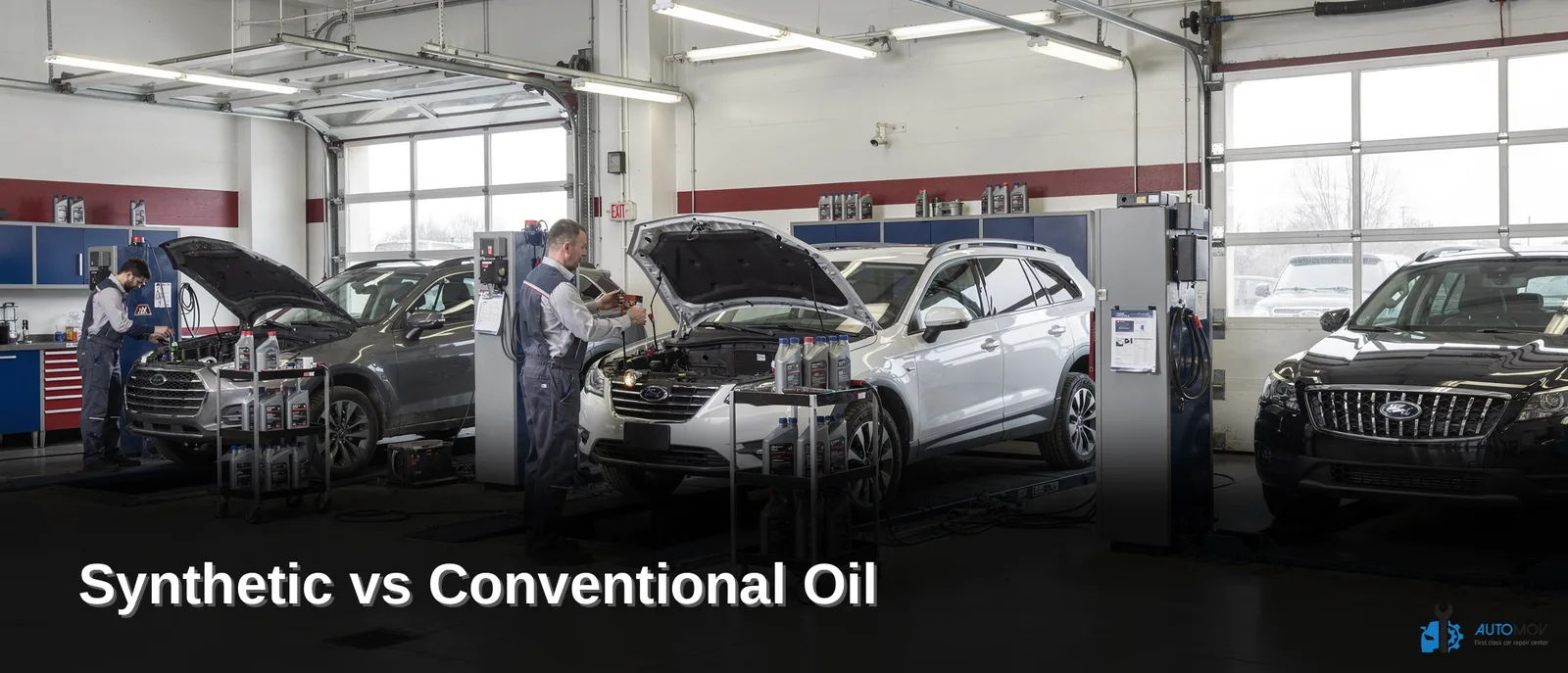
Synthetic oil outperforms conventional oil in modern engines with tighter clearances, offering better lubrication at lower viscosity—which is why manufacturers of vehicles like the Subaru Forester and Toyota Camry now recommend it. For expert guidance, visit Mobil 1 Lube Express in Parsippany, NJ.
Synthetic oil outperforms conventional oil in modern engines with tighter part clearances, including vehicles like the Subaru Forester and Toyota Camry. Lower-viscosity synthetic formulas flow faster and hold up better under high heat. Mobil 1 Lube Express provides Mobil 1 synthetic oil changes for drivers seeking stronger engine protection and longer-lasting performance across Morris County.
- Synthetic oil is now the manufacturer-recommended lubricant for mainstream vehicles like Toyota Camry and Subaru Forester.
- Modern engines have tighter clearances between metal parts, requiring synthetic oil for optimal efficiency and protection.
- Mobil 1 Lube Express operates in Parsippany, New Jersey, providing synthetic oil services and maintenance.
- Synthetic oil transitions from performance-only use to standard requirement across contemporary internal combustion engine designs.
What’s the Real Difference Between These Oils?
Molecular structure separates synthetic vs conventional oil, not just price or marketing. Conventional oil comes from refined crude, carrying natural impurities and inconsistent molecule sizes. Synthetic oil gets engineered in a lab, producing uniform molecules that resist breakdown at high heat. Drivers asking whether synthetic outperforms conventional rank among the most common questions raised before an oil change.
Engine design plays a bigger role in this comparison than most drivers realize. Newer vehicles feature tighter clearances between fast-moving metal parts, a shift that improves engine efficiency. Tighter tolerances demand oil that flows precisely and holds its protective film under stress. Conventional oil struggles to keep pace with that engineering shift; synthetic formulas handle it with more consistency.
Does synthetic oil actually last longer than conventional oil?
Synthetic oil resists thermal breakdown better than conventional oil, largely due to its engineered molecular consistency. That resistance translates into steadier lubrication across a wider temperature range. Conventional oil oxidizes faster under heat, which shortens its effective protection window.
| Factor | Conventional Oil | Synthetic Oil |
|---|---|---|
| Molecule structure | Naturally varied | Engineered, uniform |
| Performance in tight-clearance engines | Less consistent | Built for modern tolerances |
| Heat resistance | Lower | Higher |
Which oil type does Mobil 1 Lube Express service?
Mobil 1 Lube Express handles both synthetic and conventional oil changes as part of its regular maintenance lineup. Technicians work with whichever oil a vehicle’s manufacturer specifies, without steering drivers toward one option by default. Drivers throughout Parsippany, NJ have a local shop equipped to service either oil type in one visit.
Why Do Modern Engines Need Synthetic Oil?
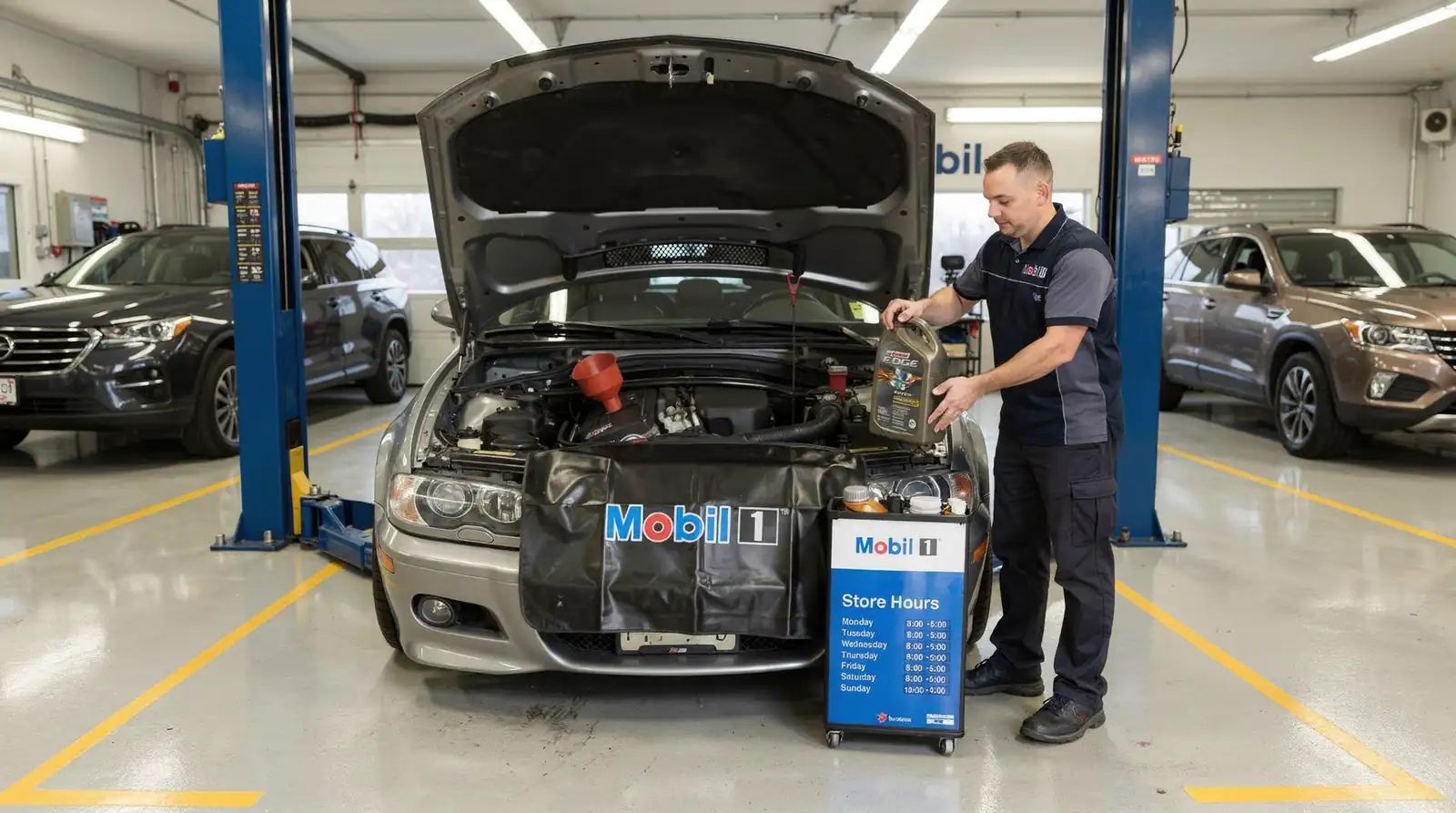
Modern engines run tighter clearances between metal parts than engines built decades ago. That precision boosts fuel efficiency but demands a thinner, more stable lubricant. Automakers increasingly build engines around this requirement, which explains why synthetic oil now appears on manufacturer-recommended service sheets for mainstream vehicles like the Subaru Forester and Toyota Camry, not just high-performance sports cars.
The engineering difference comes down to how oil behaves under heat. Lower-viscosity synthetic formulas flow more easily through narrow engine passages while maintaining a protective cushion between moving parts. At that reduced viscosity, synthetic oil holds up better under high-temperature conditions than thicker conventional oil, which can break down faster and lose its lubricating strength during long highway drives or stop-and-go traffic.
Is Synthetic Oil Really Worth It for a Daily Driver?
For commuters logging regular mileage, the answer leans toward yes. Engines with tight tolerances benefit from oil that resists thinning under heat, and that stability supports smoother performance over time. Comparing synthetic vs conventional oil side by side shows the biggest gap during extreme temperatures, exactly when conventional oil struggles most.
Mobil 1 Lube Express, located on Route 46, focuses on Mobil 1 synthetic oil changes built to extend engine life and support overall performance. The service center’s approach centers on preventative maintenance:
- Consistent oil-change intervals using synthetic formulations
- Fluid checks that catch problems before they escalate
- Filter replacements that protect engine components
That routine helps drivers improve reliability, fuel efficiency, and long-term engine protection—outcomes that matter most for commuters who depend on their vehicles daily.
When Does Conventional Oil Still Make Sense?
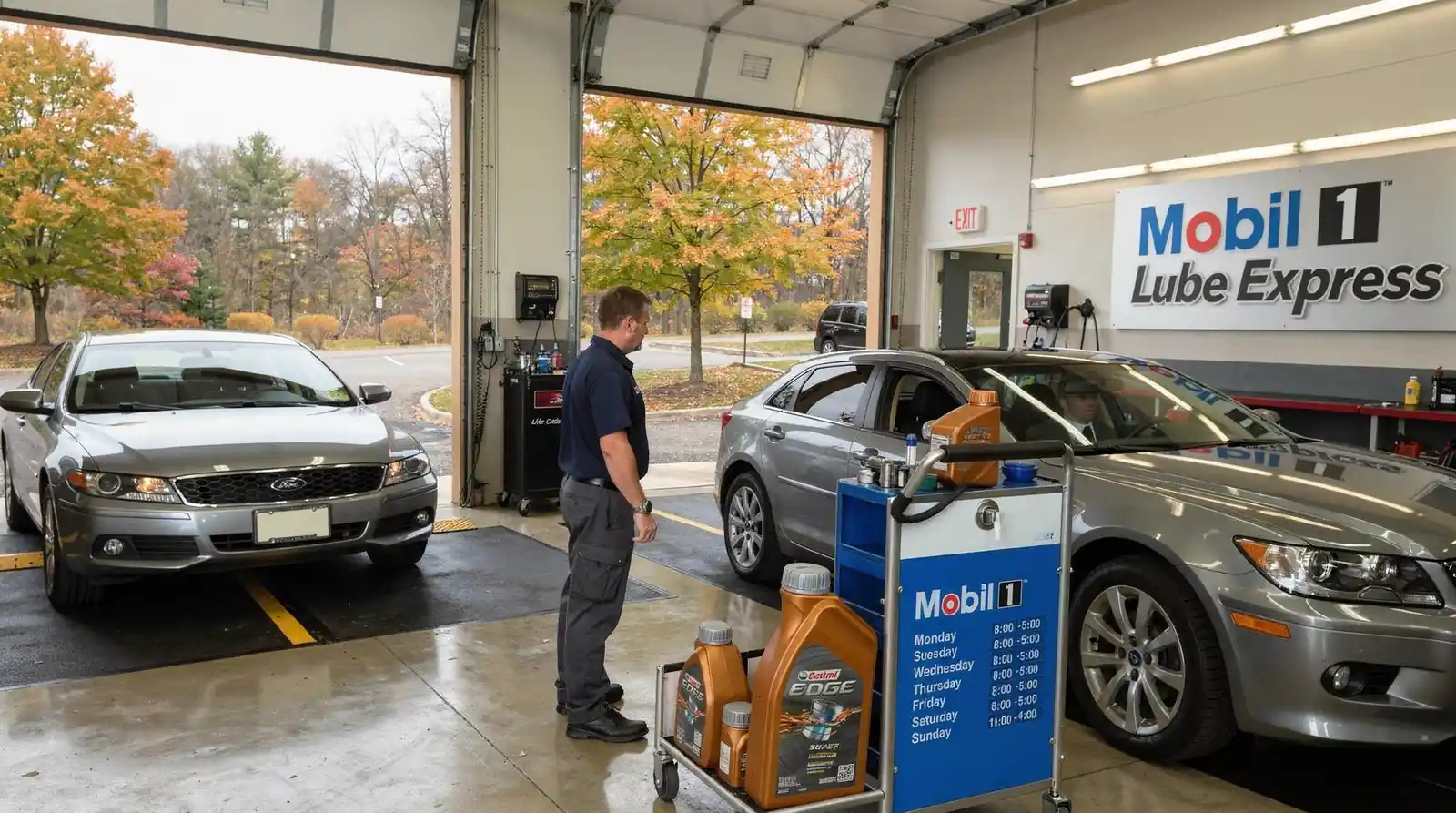
Conventional oil still fits certain budgets and older vehicles that don’t demand tighter engine tolerances. Cost drives the decision for many drivers weighing synthetic vs conventional oil. Synthetic formulas typically carry a higher price tag at the pump or the service counter. That price gap matters for anyone tracking maintenance expenses over the life of a vehicle.
Some owners prioritize keeping monthly costs down rather than chasing every performance edge an engine oil can offer. Conventional oil remains a valid option for daily commuters with lower-mileage habits or vehicles that don’t require the thinner, high-temperature-resistant formulas found in modern synthetics.
Is Conventional Oil Bad for a Car?
Conventional oil isn’t a poor choice for every vehicle. Many engines run fine on it, especially older models built before manufacturers started specifying tighter clearances. The right choice depends on the vehicle’s age, mileage, and manufacturer recommendations rather than a blanket rule.
Where Can Drivers Get Either Oil Type Nearby?
Mobil 1 Lube Express serves drivers throughout Parsippany, Morris Plains, Denville, East Hanover, Montville, Rockaway, and Randolph with both oil options available in one location. That means comparing synthetic and conventional choices doesn’t require multiple stops or separate appointments.
Technicians at the shop walk drivers through the tradeoffs based on their specific vehicle, not a one-size-fits-all script. Honest recommendations guide the conversation, whether a car benefits from synthetic protection or runs perfectly well on a conventional fill. Questions worth raising during a visit include:
- Does the owner’s manual specify a required oil type?
- How many miles does the vehicle typically log between changes?
- Is budget or long-term engine protection the higher priority?
Answering those questions with a technician turns an abstract choice into a practical one.
How Does Switching Oils Affect Engine Cleanliness?
Switching to a high-quality synthetic formula changes engine cleanliness by targeting deposits that conventional oil often leaves behind. Continuous use of certain synthetic formulations removes built-up deposits. Blocks new ones from forming, restoring internal engine surfaces closer to a factory-clean condition. Sludge and varnish buildup rob engines of efficiency over months of driving. A cleaner engine interior means less friction, steadier oil flow, and fewer surprises at the next inspection.
The comparison between synthetic vs conventional oil often comes down to what happens inside the engine over time, not just what’s poured in at the counter. Conventional oil breaks down faster under heat, leaving deposits that accumulate with every missed or delayed change. Synthetic formulations resist that breakdown and keep contaminants from settling into critical engine areas.
Does a Quick Oil Change Still Get the Job Done?
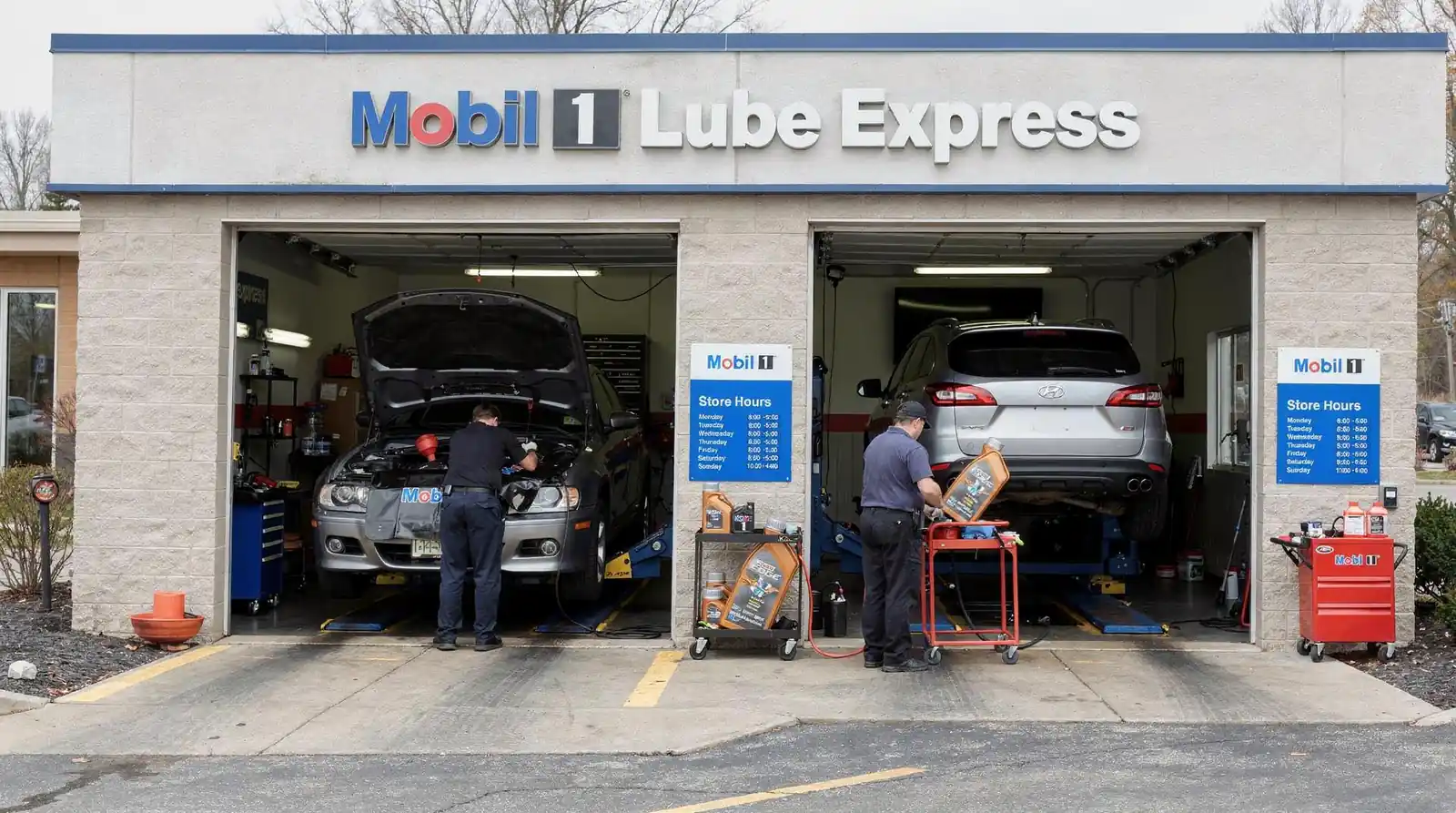
Speed does not have to come at the cost of quality. Mobil 1 Lube Express pairs efficient service with trusted synthetic products. Drivers avoid long waits while still getting engine-protecting results. Fast turnaround keeps commuters from skipping or postponing changes, which is often how deposit buildup starts in the first place.
Why Does Consistent Maintenance Matter More Than a Single Switch?
One oil change alone won’t undo months of buildup. Consistent, honest preventative maintenance keeps deposits from reforming and supports smoother, more reliable operation over the life of the engine.
For everyday commuters and DIY-minded owners alike, the takeaway stays simple:
- Deposits accumulate gradually, not overnight.
- Regular synthetic changes interrupt that buildup cycle.
- Reliability improves when maintenance stays consistent, not occasional.
Which Oil Should You Choose For Your Car?
Vehicle age, mileage, and manufacturer specs determine the right answer, not brand loyalty alone. Skipping this decision costs drivers real money: the wrong oil accelerates engine wear and shortens the interval between services. Mobil 1 Lube Express pairs fast turnaround with synthetic vs conventional oil options. Drivers leave with the product that matches their engine’s actual needs, not a one-size-fits-all pour.
Technicians at the shop weigh factors like driving habits, climate, and vehicle history before making a recommendation. That guidance, paired with quality Mobil 1 products, gives customers a clear path instead of guesswork.
Is full synthetic oil worth it for an older car?
High-mileage vehicles often benefit from specialized formulas built to address wear on aging seals and components. Mobil 1 Lube Express offers a range that stretches from advanced full synthetic oil to high-mileage protection, letting drivers choose based on odometer reading and engine condition rather than assumption.
What if a driver isn’t sure which oil their car needs?
Uncertainty is common, and it’s a normal question to bring to the counter. Staff at Mobil 1 Lube Express walk customers through the options during the visit.
A quick comparison of common priorities:
| Driver Priority | Suggested Direction |
|---|---|
| Newer engine, tighter tolerances | Full synthetic |
| High mileage, older seals | High-mileage formula |
| Budget-conscious, low annual mileage | Conventional |
Every recommendation ties back to one goal: performance and peace of mind. Top-quality products, combined with attentive service, help vehicles run reliably between visits, giving owners fewer surprises down the road.
Choosing between synthetic and conventional oil ultimately depends on your vehicle’s needs, driving habits, and maintenance priorities. Whether you prioritize extended drain intervals and stronger protection against heat. Wear or prefer a more budget-conscious approach, the right oil keeps your engine running smoothly. At Mobil 1 Lube Express in Parsippany, our experienced technicians help you select the best option for your vehicle and answer any questions about your maintenance plan.
FAQ
What’s the main difference between synthetic and conventional oil?
Synthetic oil is engineered in a lab with uniform molecules that resist breakdown at high heat. Conventional oil comes from refined crude with natural impurities and inconsistent molecule sizes.
Does synthetic oil last longer than conventional oil?
Yes, synthetic oil resists thermal breakdown better due to its engineered molecular consistency, providing steadier lubrication across a wider temperature range than conventional oil, which oxidizes faster under heat.
Does Mobil 1 Lube Express service both oil types?
Mobil 1 Lube Express in Parsippany, NJ handles both synthetic and conventional oil changes, with technicians using whichever oil the vehicle manufacturer specifies rather than defaulting to one option.
Facts
- Mobil 1 Lube Express is located in Parsippany, NJ, United States.