

Introduction
Most drivers understand that oil changes are essential, but many still wonder what actually happens during the service. Is it just a quick drain and refill? Or is there more involved in maintaining your vehicle’s engine properly?
If you have ever visited a service center and watched technicians work under your car while you waited, you might have asked yourself the same question. Some shops complete the process quickly and professionally, while others leave drivers unsure about the quality of service they received.
A professional oil change service is far more than a simple fluid replacement. When performed correctly, it is a structured maintenance procedure designed to protect the engine, extend vehicle lifespan, and identify potential issues before they become expensive repairs.
Understanding what to expect from a professional oil change service helps drivers make informed decisions about where they take their vehicles and how they maintain them.
In this guide, we will explore what happens during a professional oil change, why it matters for engine health, common mistakes to avoid, and how to choose a service provider that prioritizes quality and reliability.
Overview of a Professional Oil Change Service
A professional oil change service involves several carefully executed steps that ensure your engine receives the proper lubrication and protection it needs.
While the exact process may vary depending on the vehicle and service center, most professional oil changes include these essential components:
- Draining the old engine oil
- Replacing the oil filter
- Refilling the engine with fresh oil
- Checking important vehicle fluids
- Performing a basic vehicle inspection
Each of these steps plays a role in maintaining the overall health of your engine.
Draining the Old Oil
The first step in any oil change service is removing the old oil from the engine.
Technicians typically lift the vehicle using a hydraulic lift or position it over a service pit. A drain plug located beneath the oil pan is removed, allowing the used oil to flow into a collection container.
Old oil often contains:
- Dirt and debris
- Combustion byproducts
- Tiny metal particles from engine wear
Removing contaminated oil is essential for restoring proper engine lubrication.
Replacing the Oil Filter
The oil filter plays a crucial role in protecting your engine.
As oil circulates through the engine, the filter captures contaminants that could damage internal components. Over time, the filter becomes clogged with debris.
A professional oil change service always includes replacing the oil filter to ensure clean oil continues circulating through the engine.
Adding Fresh Engine Oil
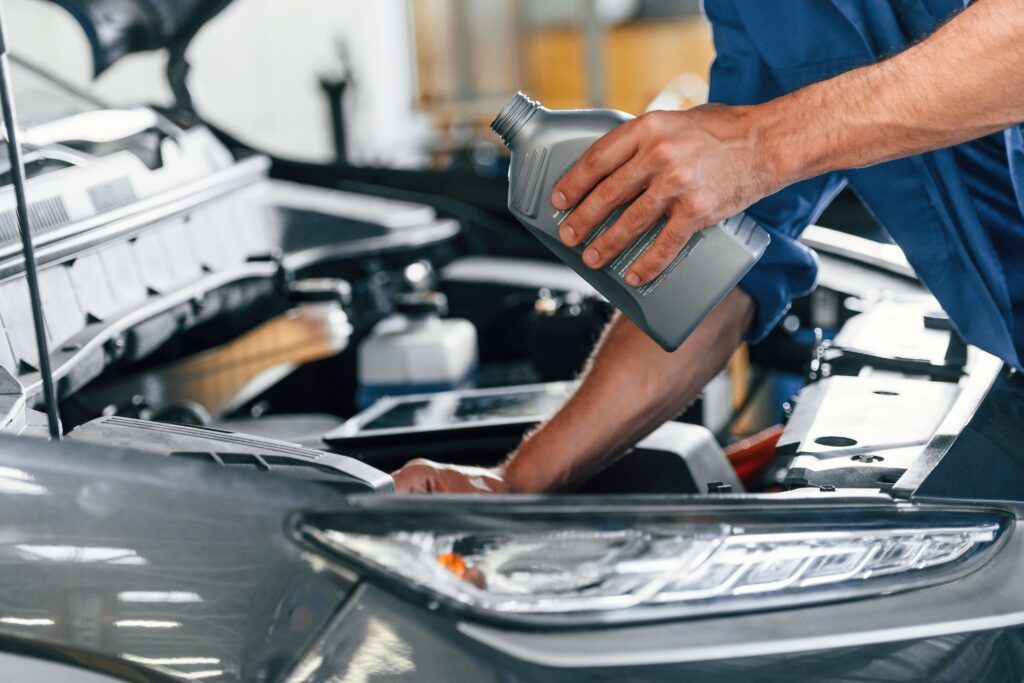
After the old oil has been drained and the filter replaced, technicians refill the engine with fresh motor oil that meets manufacturer specifications.
Common types of motor oil include:
- Full synthetic oil
- Synthetic blend oil
- High mileage oil
- Conventional oil
Using the correct oil viscosity and formulation is critical for maintaining proper engine performance.
Why Professional Oil Change Services Matter
Some drivers assume oil changes are simple enough that any service location will do. However, the quality of an oil change can significantly impact engine performance and longevity.
Protecting Internal Engine Components
Inside your engine are many moving parts that operate at extremely high speeds.
These include:
- Pistons
- Camshafts
- Crankshafts
- Bearings
Fresh oil creates a thin protective film that reduces friction between these components and prevents excessive wear.
Preventing Engine Sludge
Over time, oil collects contaminants that can form sludge if not removed regularly.
Engine sludge can restrict oil flow and reduce lubrication, potentially leading to serious mechanical problems.
Routine oil changes prevent sludge buildup and keep the engine clean.
Maintaining Optimal Engine Performance
Clean oil allows engine parts to move smoothly with minimal resistance.
When oil becomes dirty or degraded, the engine must work harder to perform the same tasks. This can lead to reduced efficiency and increased fuel consumption.
Supporting Long Term Vehicle Reliability
Regular oil changes are one of the simplest and most effective ways to extend the life of your engine.
Vehicles that receive consistent oil maintenance often last significantly longer than those that experience neglected service.
Common Problems Drivers Experience With Oil Change Services
While oil changes are routine maintenance tasks, drivers sometimes encounter issues that affect service quality.
Using the Wrong Oil Type
Different vehicles require specific oil viscosities and formulations.
Using the wrong oil type can reduce lubrication effectiveness and may harm engine performance.
Reusing an Old Oil Filter
Some low-quality service providers may fail to replace the oil filter properly.
A clogged filter allows contaminants to continue circulating through the engine.
Incorrect Oil Levels
Adding too much or too little oil can cause engine problems.
Professional technicians always check oil levels carefully using a dipstick after the refill process.
Skipping Important Inspections
A professional oil change service should include basic vehicle checks such as fluid inspections and visual assessments.
Skipping these checks means missing opportunities to detect early vehicle issues.
Expert Tips for Choosing a Professional Oil Change Service
Selecting the right service provider can make a major difference in the quality of maintenance your vehicle receives.
Choose Experienced Technicians
Look for service centers that employ trained technicians who understand proper oil maintenance procedures.
Experienced staff ensure your vehicle receives the correct oil and filter.
Ask About Oil Quality
High-quality oil provides better protection against heat and wear.
Ask whether the service center uses:
- Manufacturer-approved oil
- High-quality synthetic oil options
- Properly rated oil filters
Look for Transparency
Professional service providers explain what is included in the oil change and answer questions clearly.
Transparency builds trust and helps drivers understand their vehicle’s maintenance needs.
Read Customer Reviews
Customer reviews can provide insight into service quality and reliability.
Look for businesses known for:
- Honest recommendations
- Efficient service
- Professional technicians
- Consistent maintenance standards
Step-by-Step Guide to a Professional Oil Change Service
Understanding the typical process can help drivers know what to expect when visiting a service center.
Step 1: Vehicle Check-In
Technicians confirm the vehicle’s make, model, and mileage while verifying the recommended oil type.
Step 2: Drain Old Engine Oil
The old oil is completely drained to remove contaminants and degraded fluid.
Step 3: Install a New Oil Filter
A fresh oil filter is installed to ensure that clean oil circulates through the engine.
Step 4: Add Fresh Oil
Technicians refill the engine with the correct amount and type of oil.
Step 5: Final Inspection
Before completing the service, technicians check oil levels and inspect basic vehicle components such as fluids, filters, and tire pressure.
Frequently Asked Questions
1. How long does a professional oil change take?
Most professional oil changes take 15 to 30 minutes, depending on the vehicle and service center.
2. How often should I change my engine oil?
Most vehicles require oil changes every 5,000 to 10,000 miles, depending on the oil type and driving conditions.
3. Is synthetic oil better than conventional oil?
Synthetic oil often provides better protection under extreme temperatures and may last longer than conventional oil.
4. What happens if I skip oil changes?
Skipping oil changes can cause oil to degrade and accumulate contaminants, potentially leading to engine wear or sludge buildup.
5. Can I check my engine oil at home?
Yes. Checking oil using the dipstick is a simple process that most drivers can perform in a few minutes.
Final Thoughts
A professional oil change service is one of the most important maintenance tasks for keeping your vehicle running smoothly.
By draining contaminated oil, replacing the oil filter, and adding fresh high-quality motor oil, technicians help ensure that your engine remains properly lubricated and protected.
Drivers who choose reputable service providers and follow recommended oil change intervals often experience better engine performance, improved reliability, and fewer costly repairs.
Understanding what to expect from a professional oil change service allows you to approach vehicle maintenance with confidence and keep your engine in excellent condition for years to come.