

Introduction: The Small Habit That Saves Your Engine
Every vehicle owner hopes their car will last for years without major problems. Whether you rely on your car for commuting, family trips, or daily errands, the engine is the heart of that reliability. Yet many drivers unknowingly shorten the life of their engine by overlooking one simple maintenance habit: regular oil changes.
Engine oil might not seem like a big deal. It’s just a fluid, after all. But inside your engine, oil performs several critical functions that protect metal components from heat, friction, and contamination.
Over time, however, oil breaks down. It collects dirt, carbon deposits, and tiny metal particles produced by normal engine wear. As oil becomes contaminated, it loses its ability to lubricate and protect internal parts.
That’s when problems begin.
Regular oil changes remove dirty oil and replace it with fresh, clean lubrication that keeps engine components operating smoothly. This simple service can make the difference between an engine that lasts 80,000 miles and one that easily reaches 200,000 miles or more.
In this guide, we’ll explore how regular oil changes extend the life of your engine, why oil maintenance matters so much, and what drivers can do to keep their engines running strong for the long haul.
Overview: Why Engine Oil Is So Important
Inside a modern engine, dozens of components move thousands of times per minute. Pistons travel up and down within cylinders, camshafts rotate, and crankshafts convert energy into motion.
Without proper lubrication, these parts would grind against each other and quickly fail.
Engine oil provides a protective barrier that prevents direct metal-to-metal contact. It also performs several other essential tasks:
- Lubricates moving engine components
- Reduces friction between metal parts
- Helps regulate engine temperature
- Cleans debris and contaminants
- Prevents corrosion inside the engine
As oil circulates through the engine, it passes through the oil filter, which captures harmful particles. However, even the best oil eventually becomes contaminated and begins to degrade.
That’s why regular oil changes are necessary.
Why Regular Oil Changes Matter for Engine Longevity
An engine is designed to operate under intense conditions. Temperatures can exceed hundreds of degrees, and internal parts are constantly moving at high speed.
Without fresh oil, these conditions can cause serious wear.
Reduced Friction
Clean oil creates a thin lubricating layer between engine components.
When friction is reduced, parts can move freely without grinding against each other.
Better Heat Control
Oil absorbs heat generated by engine components and helps distribute it throughout the system.
Dirty oil loses this ability, which can cause overheating.
Cleaner Engine Components
Fresh oil contains detergents that help remove contaminants from internal engine parts.
This prevents harmful deposits from forming.
Improved Engine Efficiency
An engine running on clean oil operates more smoothly and efficiently.
This reduces strain on internal components and helps extend engine life.
Common Problems When Oil Changes Are Neglected
Many drivers delay oil changes because their car still seems to run normally. Unfortunately, the damage caused by dirty oil often develops gradually.
Here are some of the most common problems caused by neglected oil changes.
Engine Sludge Buildup
Sludge forms when degraded oil mixes with dirt and combustion byproducts.
Over time, sludge accumulates inside the engine and restricts oil flow.
Increased Engine Wear
Dirty oil cannot provide proper lubrication.
Without protection, engine parts wear down faster.
Overheating
Oil helps regulate engine temperature. When oil loses its effectiveness, the engine may run hotter than normal.
Reduced Fuel Efficiency
Engines working harder due to increased friction often consume more fuel.
Shortened Engine Lifespan
Over time, neglected oil changes can lead to severe engine damage or failure.
Routine maintenance helps prevent these problems.
Expert Tips to Maximize Engine Life Through Oil Maintenance
Keeping your engine healthy doesn’t require complicated maintenance routines. Consistent oil care is one of the most effective ways to protect your vehicle.
Follow Recommended Oil Change Intervals
Most vehicles require oil changes every 5,000 to 7,500 miles, although synthetic oil may allow longer intervals.
Always consult your owner’s manual for manufacturer recommendations.
Use the Correct Oil Type
Your vehicle’s engine is designed to operate with specific oil viscosities such as:
- 0W-20
- 5W-20
- 5W-30
Using the correct oil helps maintain proper lubrication.
Replace the Oil Filter
Oil filters trap contaminants that circulate through the engine.
Replacing the filter ensures clean oil circulation.
Monitor Oil Levels
Checking oil levels periodically helps ensure the engine receives proper lubrication.
Low oil levels can lead to serious damage.
Consider Synthetic Oil
Synthetic motor oils offer better protection against heat, oxidation, and sludge formation.
Many modern engines benefit from synthetic oil.
Step-by-Step: What Happens During an Oil Change
An oil change may seem simple, but it plays a critical role in maintaining engine health.
Step 1: Drain the Old Oil
The technician removes the oil drain plug and allows the contaminated oil to drain completely.
Step 2: Replace the Oil Filter
The old oil filter is removed and replaced with a new one.
This ensures contaminants are captured effectively.
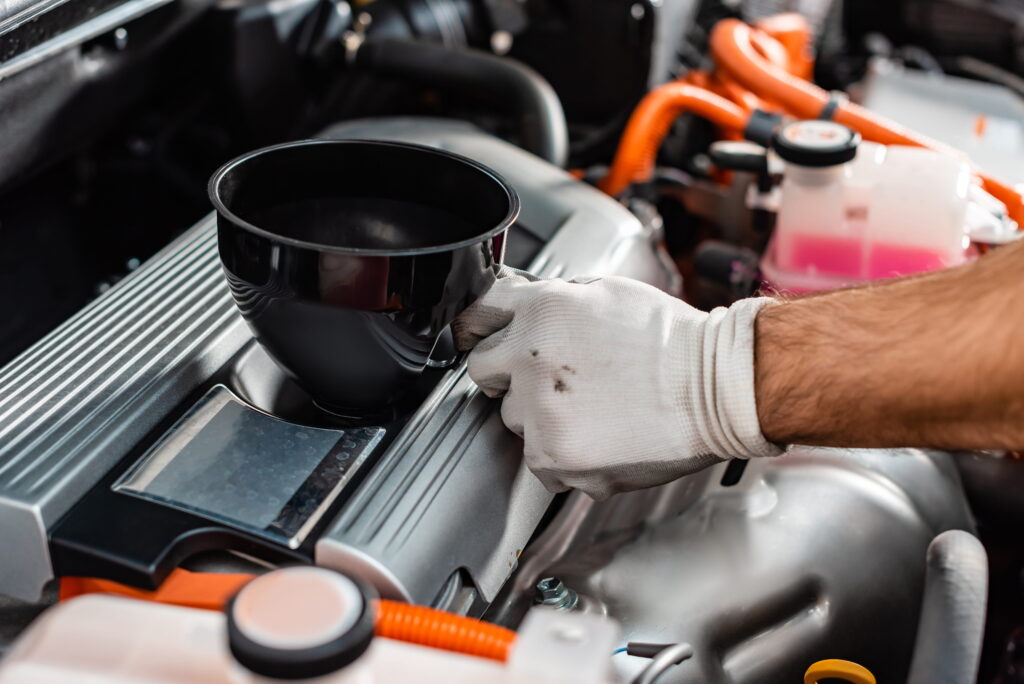
Step 3: Add Fresh Engine Oil
Fresh oil is added according to the manufacturer’s specifications.
Step 4: Inspect the Engine
Technicians check for leaks and verify proper oil levels.
Step 5: Reset the Oil Monitoring System
Many modern vehicles track oil life electronically. The system is reset to monitor the next service interval.
This process restores clean lubrication throughout the engine.
Frequently Asked Questions
How often should I change my engine oil?
Most vehicles require oil changes every 5,000 to 7,500 miles, though synthetic oil may last longer depending on manufacturer recommendations.
Can regular oil changes really extend engine life?
Yes. Clean oil reduces friction, prevents overheating, and removes contaminants that could damage engine components.
What happens if oil changes are skipped?
Skipping oil changes can lead to sludge buildup, increased engine wear, and eventual engine failure.
Is synthetic oil better for engine longevity?
Synthetic oil typically offers better heat resistance and lubrication, which can help extend engine life.
How long should a well-maintained engine last?
With proper maintenance, many engines can last 200,000 miles or more.
Final Thoughts: The Simplest Way to Protect Your Engine
Your engine is one of the most valuable and complex components of your vehicle. Protecting it doesn’t require expensive upgrades or complicated repairs.
In many cases, the most effective maintenance habit is also the simplest: regular oil changes.
Clean oil keeps engine parts properly lubricated, reduces friction, regulates temperature, and removes harmful contaminants. When oil becomes dirty, these protective benefits begin to disappear.
By staying consistent with oil changes, drivers can reduce engine wear, improve performance, and extend the life of their vehicle.
It’s a small investment of time and money that pays off in long-term reliability and peace of mind.
For anyone who wants their vehicle to run smoothly for years to come, regular oil changes remain one of the smartest maintenance decisions you can make.