

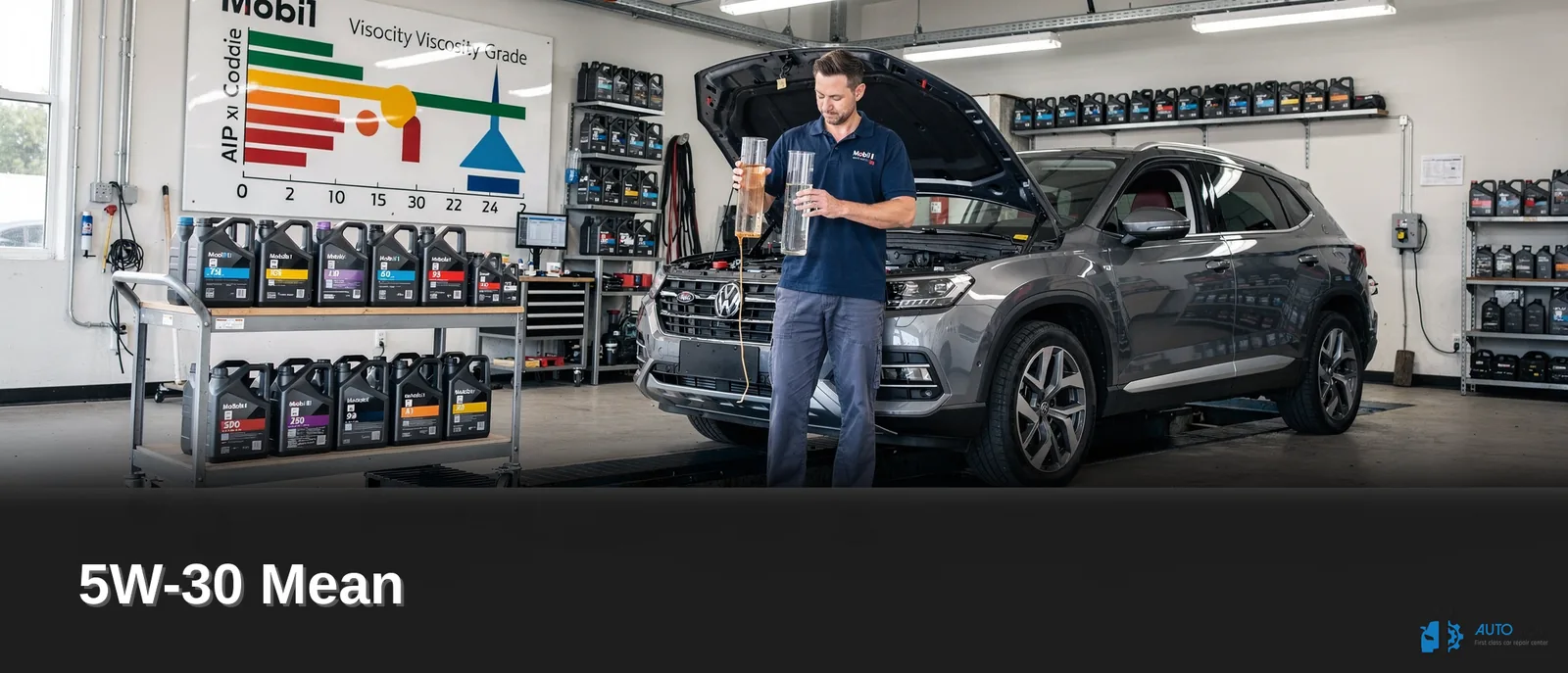
SAE 5W-30 numbers describe engine oil viscosity, standardized by the Society of Automotive Engineers. The “5W” rating measures cold-weather flow, showing the oil performs like a thinner 5-weight fluid during winter starts. The “30” measures thickness at normal engine operating temperature.
- Viscosity measures oil’s resistance to flow at two different temperatures: cold and hot conditions.
- The “5W” indicates the oil’s viscosity rating at cold temperatures, specifically minus 13 degrees Celsius.
- The “30” represents the oil’s viscosity rating at the engine’s normal operating temperature of 100 degrees Celsius.
- The API (American Petroleum Institute) developed the viscosity grading scale defined in specification API 1509.
What do oil viscosity numbers mean?
Oil viscosity numbers measure a fluid’s resistance to flow. The Society of Automotive Engineers (SAE) created a numerical code system that grades motor oils based on their viscosity characteristics. This system helps drivers select the right oil for their engine’s operating conditions.
How does the SAE grading system work?
The SAE assigns a single number for single-grade oils, such as SAE 30. For multigrade oils, the label shows two numbers separated by a “W,” like 5W-30. The “W” stands for winter, indicating the oil’s cold-weather performance. The first number (5W) represents the oil’s flow at low temperatures. The second number (30) indicates its viscosity at high operating temperatures.
Why do oils have two viscosity ratings?
Because oil viscosity changes with temperature, multigrade oils were developed to provide protection across a wide temperature range. A 5W-30 oil flows like a thin 5-weight oil in cold weather for easy starting. Thickens to a 30-weight oil at engine operating temperature for proper lubrication. This dual rating eliminates the need for seasonal oil changes.
What do the numbers actually mean?
| Number | Meaning |
|---|---|
| 5W | Low-temperature viscosity rating (winter performance) |
| 30 | High-temperature viscosity rating (operating temperature) |
| Lower first number | Better cold-weather flow |
| Higher second number | Better protection at high temperatures |
Motor oil viscosity grades are based on a scale developed by the API (American Petroleum Institute) lubricant organization. The values are defined in specification API 1509, which measures resistance to flow at both cold and high temperatures. Mobil 1 Lube Express in Parsippany, NJ, uses this SAE grading system to help customers choose the correct oil for their vehicles. Understanding what does 5w-30 mean allows drivers to make informed decisions about engine protection.
What does the ‘W’ in 5W-30 stand for?
The ‘W’ in 5W-30 stands for WINTER. This single letter connects directly to how the oil performs in cold temperatures. The Society of Automotive Engineers (SAE) developed this grading system to help drivers understand oil behavior across different weather conditions.
How does cold weather affect oil viscosity?
The low temperature viscosity of the oil simulates starting a car on a cold winter day. That value has the letter “W” after the number and a dash after the W. For 5W-30 oil, the “5W” rating means the oil flows readily at low temperatures, providing quick engine protection during cold starts. This measurement matters because thicker oil struggles to circulate through an engine in freezing conditions.
Why don’t drivers need separate summer and winter oil anymore?
Years ago, most vehicles used one viscosity grade oil in the summer and a different viscosity grade oil in the winter. Drivers had to remember seasonal oil changes to protect their engines year-round. This created confusion and added maintenance steps.
Modern multi-grade oils eliminated this hassle through:
- Viscosity index improvers — additives that allow the same oil grade to work across temperature extremes
- Advanced base oil formulations that maintain stable flow properties in both hot and cold conditions
- Winter-specific cold-flow testing that ensures reliable startup performance down to specified temperatures
Additives such as viscosity index improvers allowed for the use of the same grade of oil year-round. A single bottle of 5W-30 now handles both January mornings and July afternoons. The “W” rating remains on the label as a reminder of the cold-weather performance built into every quart.
How do you read 5W-30 vs 10W-30?
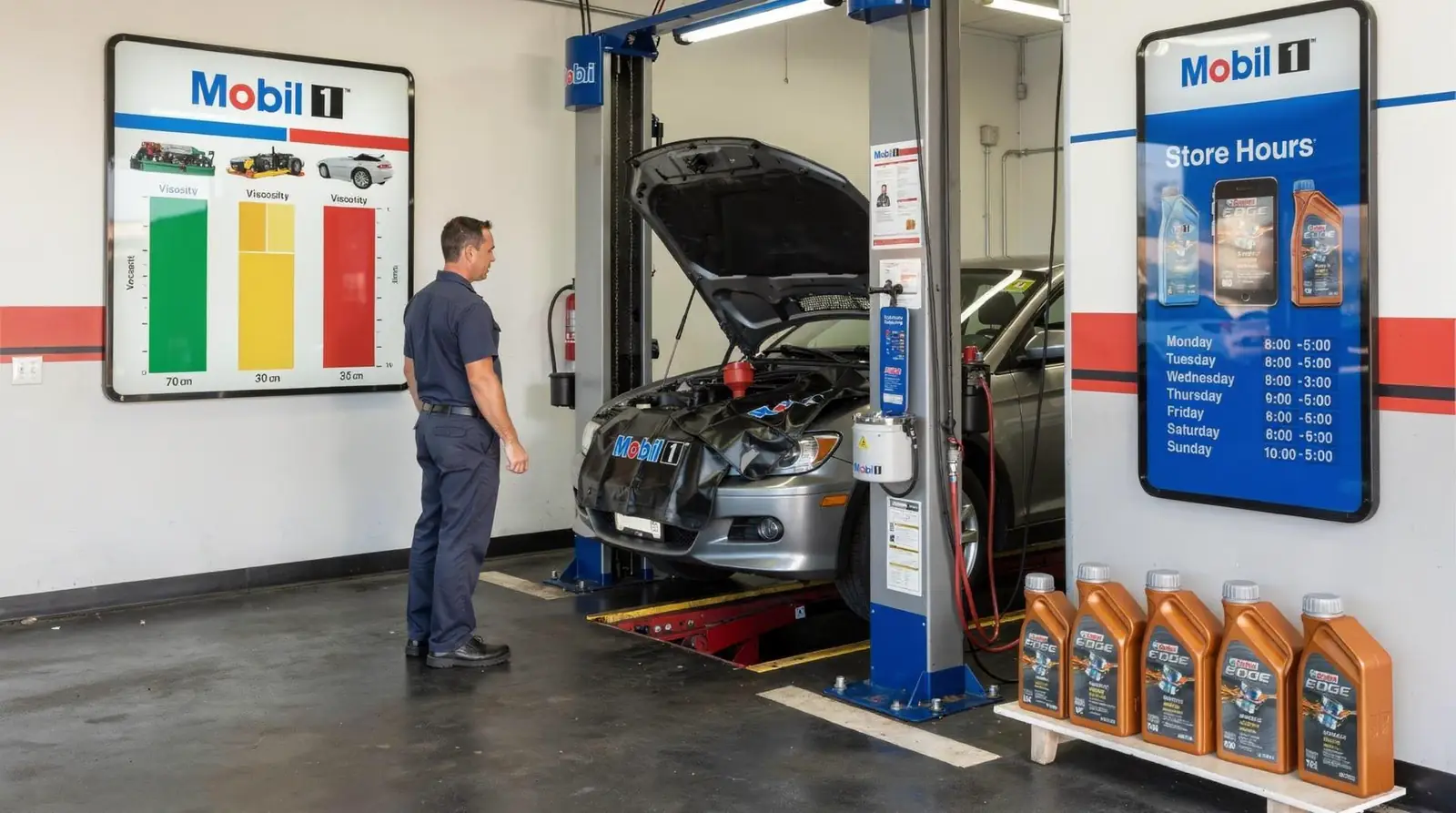
The difference between 5W-30 and 10W-30 comes down to how the oil behaves in cold temperatures. The numbers represent the viscosity of the oil, with the “W” standing for winter. Both oils share the same 30 high-temperature viscosity rating, meaning they perform identically once the engine reaches operating temperature. The critical distinction lies in the cold-start performance.
What do the numbers before the W tell drivers?
As a rule of thumb, the lower the number means lower the viscosity and increased flow at startup. A 5W-30 oil flows more easily in freezing conditions than a 10W-30 oil. That difference matters for drivers in Parsippany and North Jersey, where winter temperatures regularly drop below freezing. The 5W-30 oil circulates faster through the engine during cold starts, reducing wear on critical components during those first seconds of operation.
When should a driver choose one over the other?
| Factor | 5W-30 | 10W-30 |
|---|---|---|
| Cold-start flow | Thinner, flows better below 0°F | Thicker, better for mild winters |
| Engine protection | Superior wear protection at startup | Adequate for warmer climates |
| Fuel economy | Slightly better due to less resistance | Standard performance |
| Recommended use | Modern engines, cold climates | Older engines, warmer regions |
Vehicle manufacturers specify the correct oil grade for a reason. Using 5W-30 instead of 10W-30 in a vehicle that requires it provides better protection during cold cranking. Reduces the time the engine runs without full oil circulation. Mobil 1 Lube Express specialists review each vehicle’s requirements before recommending the appropriate grade, ensuring the engine receives the exact viscosity the manufacturer designed it to use.

Why does 5W-30 work in most climates?
The 5W-30 grade works across most climates because the oil’s viscosity changes with temperature. Multigrade oils were developed specifically to provide protection across a range of temperatures. The “5W” rating handles cold starts, while the “30” rating manages high-temperature operation. This dual nature makes the oil adaptable to seasonal shifts without requiring a separate summer and winter oil.
That approach demanded two oil changes per year and left room for error. Multigrade oils solved that problem by measuring viscosity at both high and low temperatures — properties that define multi-grade oils.
How does the viscosity rating work in cold weather?
The “W” stands for winter, and the number before it indicates cold-weather flow. A 5W oil remains fluid enough at low temperatures to reach critical engine parts quickly during startup. This rapid flow reduces wear during the most damaging phase of engine operation — the first moments after ignition.
How does the 30 rating protect in hot weather?
The “30” rating reflects the oil’s thickness at high operating temperatures. At normal engine heat, the oil maintains a protective film between moving metal parts. This balance prevents metal-on-metal contact while still allowing the oil to circulate freely through the engine.
For drivers in Parsippany and surrounding Morris County communities, this temperature range covers the seasonal swings common in North Jersey. Mobil 1 Lube Express helps drivers maintain their vehicles with high-quality products and experienced technicians. The focus on preventative maintenance helps drivers improve vehicle reliability, fuel efficiency, and long-term engine protection — regardless of the season.
How do I choose the right oil for my car?
Choosing the right oil starts with understanding what does 5w-30 mean and how viscosity grades relate to your engine’s needs. The Society of Automotive Engineers (SAE) developed a numerical coding system to grade engine oils according to their viscosity. Viscosity is the ability of a liquid to resist flow, or in other words, how thick it is. Oils have different viscosities at room temperature and react differently to temperature changes. Selecting the wrong grade can reduce fuel economy, increase engine wear, and void manufacturer warranties.
What happens if I use the wrong viscosity oil?
Using oil that is too thick at cold temperatures (like 10W-40 in winter) forces the engine to work harder during startup, increasing wear on critical components. Oil that is too thin at operating temperature (like 0W-20 in a high-mileage engine designed for 5W-30) may not maintain adequate film strength, leading to metal-on-metal contact. The owner’s manual specifies the exact SAE grade for a reason. That recommendation balances cold-start protection with high-temperature stability for that specific engine design.
How do I confirm the right oil for my specific vehicle?
Mobil 1 Lube Express technicians help customers throughout Parsippany, Morris Plains, Denville, East Hanover, Montville, Rockaway, Randolph, and nearby Morris County communities select the correct oil grade. The company is recognized for combining convenience, professional service, and trusted Mobil 1 products in a clean and efficient environment. Drivers can check three sources for the correct grade:
- The oil cap under the hood (often stamped with the SAE grade)
- The owner’s manual lubrication section
- The driver’s door jamb sticker (some vehicles list oil specifications there)
When in doubt, a professional quick lube center can verify the correct viscosity for any make and model.
Understanding oil viscosity ratings like 5W30 empowers you to make informed decisions about your vehicle’s maintenance needs. The numbers represent how your engine oil performs in cold and hot conditions, directly impacting engine protection and efficiency. By selecting the correct grade for your vehicle, you invest in reliable performance and engine longevity. Our team at Mobil 1 Lube Express stands ready to help you navigate these specifications. Ensure your vehicle receives the precise oil it deserves.
FAQ
What does the 5W in 5W-30 mean?
The 5W measures the oil’s viscosity rating at cold temperatures, specifically minus 13 degrees Celsius. It shows the oil performs like a thinner 5-weight fluid during winter starts, allowing quick circulation through the engine.
What does the 30 in 5W-30 mean?
The 30 represents the oil’s viscosity rating at the engine’s normal operating temperature of 100 degrees Celsius. This number indicates how well the oil protects and lubricates once the engine reaches full operating heat.
Who created the oil viscosity grading system?
The Society of Automotive Engineers (SAE) created the numerical grading system for oil viscosity. The API (American Petroleum Institute) developed the specific scale defined in specification API 1509 used to measure these ratings.
Facts
- Mobil 1 Lube Express is located in Parsippany, NJ, United States.