

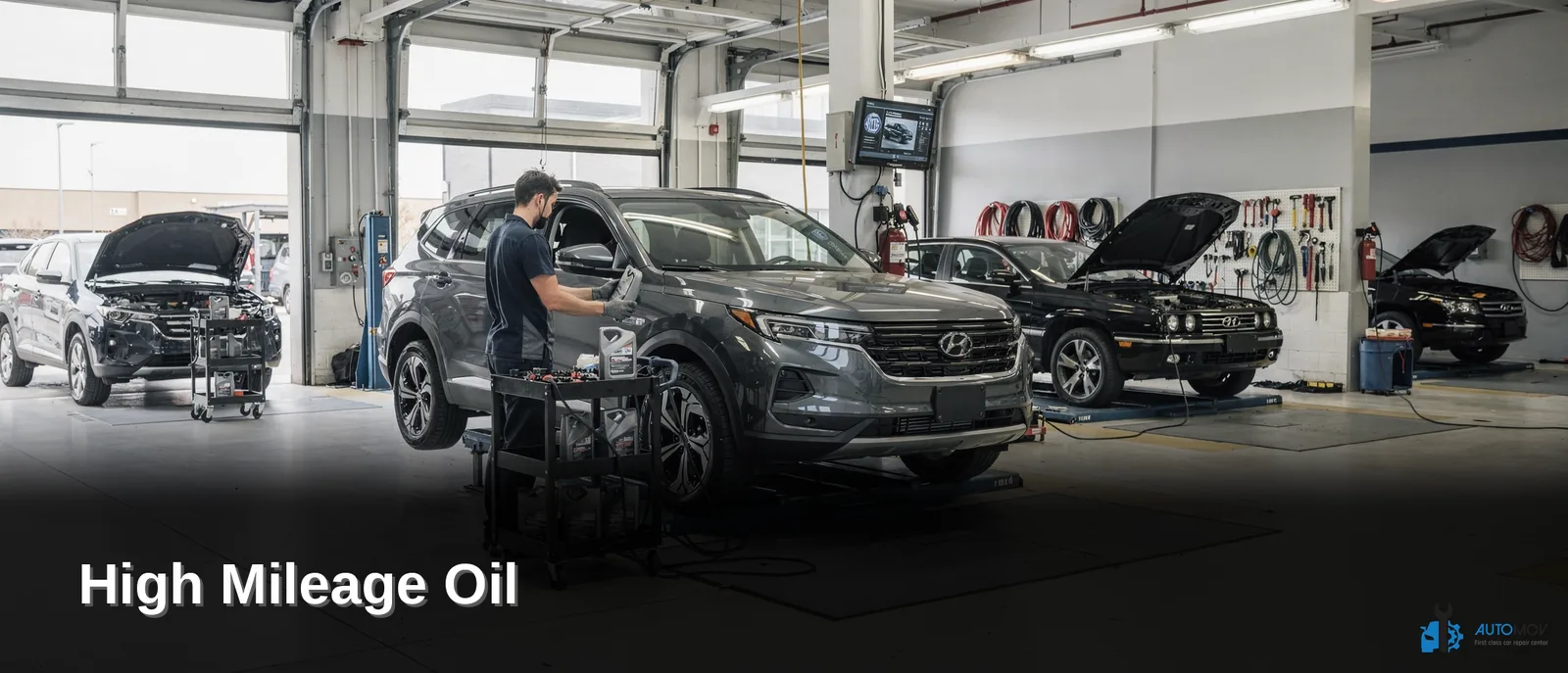
High-mileage oil is a specially formulated motor oil designed for engines past 75,000 miles, containing seal conditioners and higher viscosity to reduce leaks and oil consumption. Vehicles with worn gaskets or noticeable oil loss benefit most. The high mileage motor oil benefits — reduced seepage, steadier oil levels between visits, and protection for aging seals — are why so many drivers ask about the switch. Mobil 1 Lube Express technicians evaluate each engine’s condition before recommending a switch from conventional formulas.
- High-mileage oil formulations seal engine leaks but require continuous use to maintain effectiveness.
- Over 66 million search results exist online for high-mileage oil information and product options.
- High-mileage oils target vehicles exceeding 100,000 miles on the odometer for engine protection.
- Mobil 1 Lube Express operates in Parsippany, New Jersey, providing oil change services.
What Is High-Mileage Oil, Exactly?
High-mileage oil is a specially formulated motor oil built for engines carrying significant wear, and it differs from standard oil in real, measurable ways. Older engines develop worn seals, thinning gaskets, and microscopic wear inside cylinders. Standard oil formulas were never designed to compensate for that kind of aging.
Confusion about this product runs deep. Search results for the term high-mileage oil number in the tens of millions, a signal that drivers everywhere are asking the same question without finding a clear answer. Most owners land on a shelf full of options. No real explanation of what separates one bottle from the next.
The difference comes down to additives. High-mileage formulas include seal conditioners and anti-wear agents rarely found in standard oil. These ingredients target the specific stress points that develop as an engine accumulates miles.
What makes high-mileage oil different from regular oil?
Regular oil lubricates and cools; high-mileage oil does that while also addressing wear. Seal conditioners swell aging rubber gaskets to reduce seepage. Anti-wear agents coat metal surfaces that have thinned over years of friction and heat cycles.
Does my car need high mileage oil?
Not automatically. The right choice depends on engine condition, seal health, and how the vehicle has been maintained over time. Mobil 1 Lube Express, located on Route 46, specializes in Mobil 1 synthetic oil changes and related services built to extend vehicle performance and engine life, including options relevant to higher-mileage cars. The team’s Mobil1 oil change service is designed to keep a vehicle running at its best, a standard that matters even more once an engine has racked up substantial miles.
Quick comparison:
| Feature | Standard Oil | High-Mileage Oil |
|---|---|---|
| Seal conditioners | Rare | Included |
| Anti-wear agents | Limited | Included |
| Target vehicle | Newer engines | Engines with significant wear |
How Does High-Mileage Oil Differ From Regular Oil?
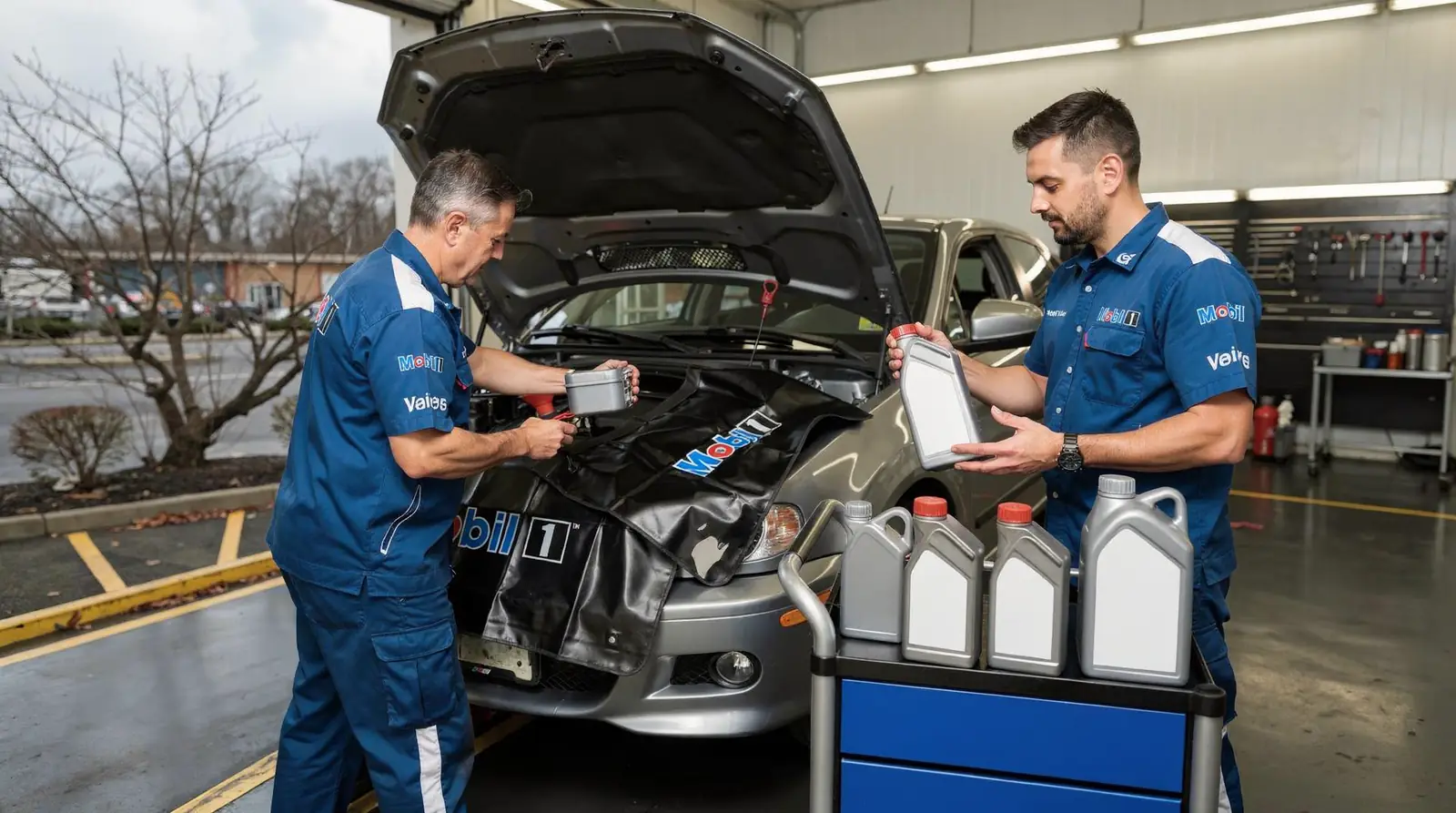
Formulation sets high-mileage oil apart from standard motor oil. High-mileage oil contains additives and seal enhancers designed to reduce leaks, both internal and external, in engines that have logged significant miles. Regular oil skips these extra ingredients because newer engines rarely need them. Older engines, on the other hand, develop worn seals and gaskets that standard formulas were never built to address.
Seal conditioners make up the biggest difference. These compounds restore some flexibility to aging engine seals, which lowers the odds of new leaks forming down the road. Standard oil focuses mainly on lubrication and viscosity control; it does little to rejuvenate hardened rubber components. That gap matters once an engine crosses into higher mileage territory, where gasket wear becomes a real concern.
Is high-mileage oil just a marketing label?
No — the seal-conditioning additives represent a genuine formulation difference, not a repackaged product. Engines with higher mileage face different wear patterns than newer ones, and the additive package targets those specific issues. Drivers weighing the switch should look at oil consumption and leak history rather than odometer numbers alone.
Mobil 1 Lube Express carries both synthetic. Conventional oil changes, giving drivers a way to match the formula to their vehicle’s condition and mileage. Technicians at the shop help drivers select the right oil type, including high-mileage formulas built on Mobil 1 products. That guidance matters because picking the wrong oil wastes money and does nothing to slow seal wear.
| Feature | Regular Oil | High-Mileage Oil |
|---|---|---|
| Seal conditioners | Not included | Included |
| Leak reduction | Minimal | Targeted |
| Typical vehicle fit | Newer engines | Higher-mileage engines |
When Should You Switch to High-Mileage Oil?
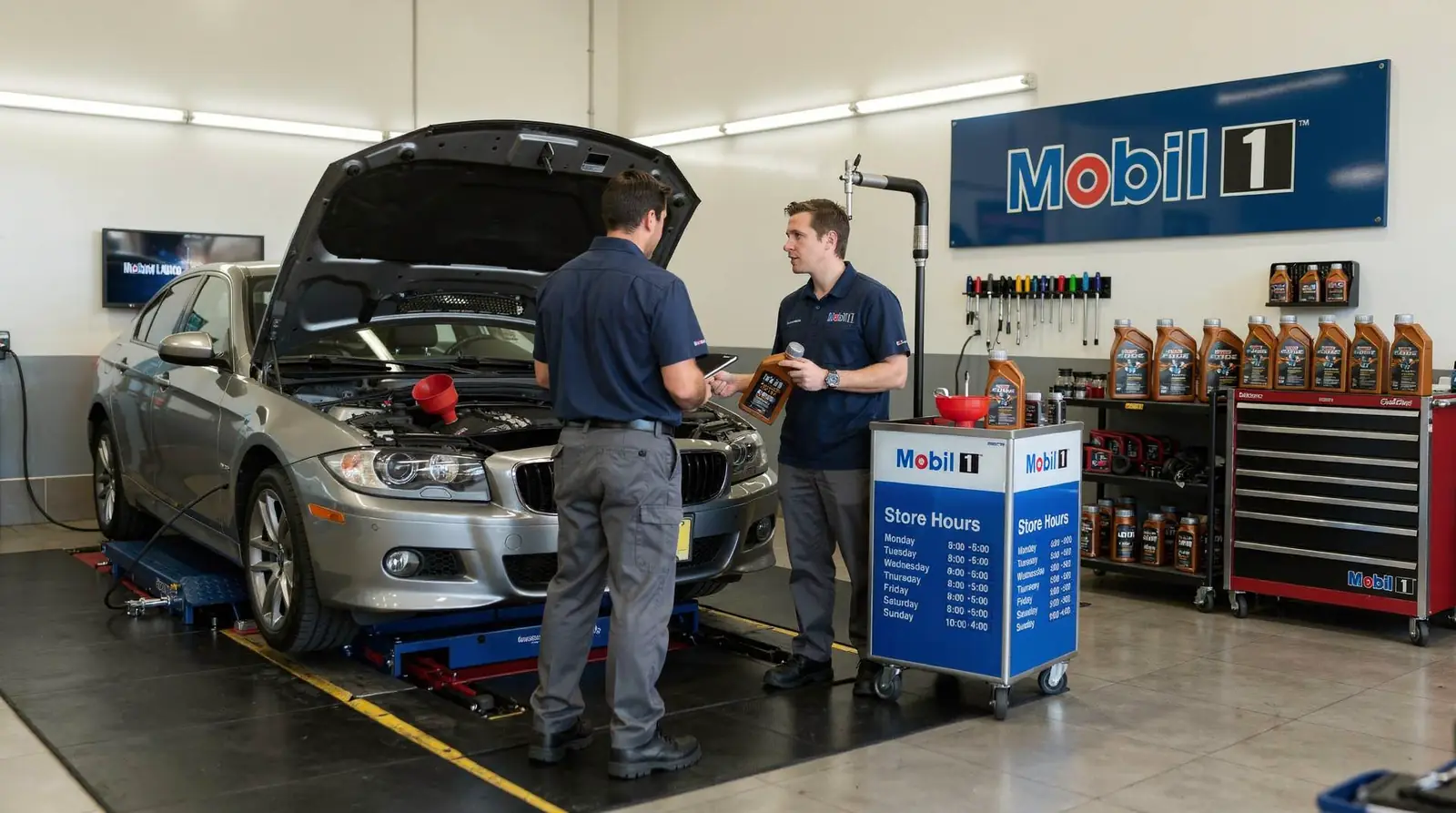
Knowing when to use high mileage oil comes down to more than the odometer; engine condition and driving habits matter more than mileage alone. Many drivers first notice high-mileage oil options once the odometer passes roughly 100,000 miles, spotting the label at an auto parts counter or during a routine visit. That number is a common trigger point, not a strict rule.
Vehicle age changes what an engine needs to stay protected. Choosing the right oil formulation as a car gets older supports long-term engine protection, steadier reliability, and better fuel efficiency over time. Older engines have more wear on seals and internal components. Oil formulated for that wear profile responds to those changes directly.
How does a driver know if it’s time to switch?
The answer depends on what shows up during service, not just the mileage number on the dashboard. A technician who checks oil condition, seal integrity, and consumption patterns at each visit can offer an honest recommendation on whether high-mileage oil fits the vehicle. That kind of guidance turns a guessing game into a straightforward decision.
What happens if a driver waits too long?
Skipping the evaluation doesn’t pause engine wear. Consistent preventative maintenance, including a proper oil choice, keeps engines running smoothly as mileage climbs, and it helps reduce unexpected downtime.
A few signs worth flagging at the next visit:
- Vehicle mileage approaching or past 100,000 miles
- Minor oil leaks or seepage near seals and gaskets
- Increased oil consumption between changes
- Engine age nearing a decade or more of regular use
None of these signs demand an automatic switch. They’re conversation starters. A quick check during a scheduled oil change settles the question with real information instead of guesswork.
Does High-Mileage Oil Really Stop Leaks?
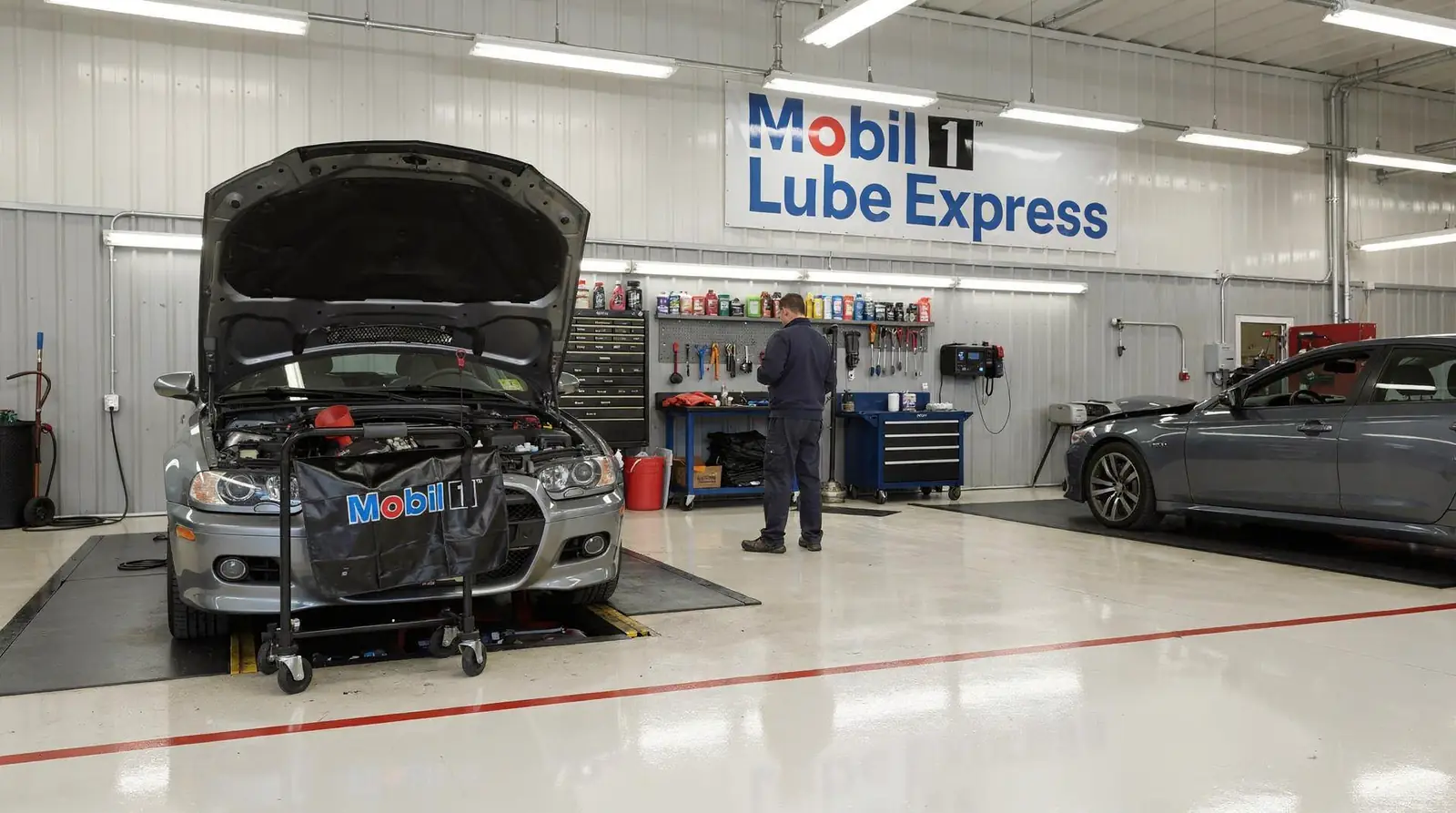
Yes, high-mileage oil often seals existing leaks, and high mileage oil leak prevention works best when the switch stays consistent. Seal conditioners inside the formula swell aging gaskets and O-rings, closing small gaps where oil seeps out. Drop the leaky engine back into standard oil, though, and that seepage frequently returns. The seal isn’t permanent — it’s maintained by the additive package doing its job, drive after drive.
That distinction matters for anyone deciding whether high-mileage oil belongs in the next service. Understanding what is high mileage oil designed to do. Versus what it can’t do — prevents disappointment down the road.
Can high-mileage oil repair internal engine wear?
No. High-mileage oil does not restore worn piston rings, rebuild internal components, or reverse mechanical wear. Its role is narrower: managing seals and slowing oil loss, not repairing the engine itself. Drivers expecting a mechanical fix from a bottle should reset those expectations before their next oil change.
What should drivers watch for after switching?
Track oil consumption and check for spots on the driveway over a few weeks. Improvement usually shows up as fewer stains and a more stable dipstick reading between changes.
A few practical takeaways for owners weighing the switch:
- Consistency counts — seal conditioners work only while the vehicle keeps using the formula.
- Expectations should stay realistic — leak reduction, not engine repair, is the outcome.
- Product matching matters — well-matched oil supports longer-lasting performance and helps protect engines as mileage climbs.
Mobil 1 Lube Express, serving drivers across Parsippany, Morris Plains, Denville, and East Hanover, gives owners a consistent place to reassess oil choice whenever leaks or consumption patterns change.
Should You Switch at Mobil 1 Lube Express?
A drive to Parsippany, NJ answers the question directly. Mobil 1 Lube Express gives Morris County drivers a place to get a straight recommendation as odometer numbers climb. Skipping that conversation risks the wrong oil sitting in an aging engine for thousands of miles, quietly wearing down seals and gaskets that a simple product switch could protect.
So what actually separates one oil from another at higher mileage? High-mileage oil contains seal enhancers and additive packages built for engines that have logged significant wear. Standard oil lacks those components, which matters once a vehicle crosses into older-engine territory.
How does a technician decide which oil fits a vehicle?
Fast turnaround does not mean guesswork. Mobil 1 Lube Express pairs efficient service with Mobil 1 products. The recommendation reflects the vehicle in the bay, not a generic script. Technicians weigh mileage, engine condition, and any signs of leaking before suggesting a switch.
What happens if a driver switches back and forth?
Consistency matters more than most drivers expect. Once high-mileage oil seals a leak, reverting to conventional oil often lets that leak return. That reversal makes a single visit less useful than an ongoing plan built around the vehicle’s actual mileage.
Preventative maintenance built around the right oil choice also reduces unplanned downtime over time. A short comparison shows why the choice carries weight:
| Scenario | Risk of Skipping the Right Oil |
|---|---|
| High-mileage engine, standard oil | Seals stay unprotected, leaks may develop or persist |
| High-mileage engine, then switched back | Previously sealed leaks can reappear |
| Ongoing high-mileage use with consistent service | Fewer surprises, more predictable maintenance |
Drivers throughout Parsippany, Morris Plains, Denville, East Hanover, Montville, and Randolph can get that guidance at each visit instead of guessing at the counter.
High-mileage oil represents a smart investment for vehicles with substantial engine wear, delivering targeted protection where conventional formulations fall short. Whether your car needs it depends on your vehicle’s age, mileage history, and manufacturer recommendations—factors our experienced technicians evaluate during every service visit. At Mobil 1 Lube Express in Parsippany, we help drivers make informed maintenance decisions that keep their engines running strong for years to come.
FAQ
What is high-mileage oil?
High-mileage oil is a specially formulated motor oil designed for engines past 75,000 miles, containing seal conditioners and higher viscosity to reduce leaks and oil consumption.
Does every high-mileage vehicle need to switch to this oil?
Not automatically. The right choice depends on engine condition, seal health, and how the vehicle has been maintained over time, so Mobil 1 Lube Express technicians evaluate each engine before recommending a switch.
How does high-mileage oil differ from regular oil?
High-mileage oil contains seal conditioners and anti-wear agents that regular oil rarely includes, targeting worn seals and gaskets in older engines. Standard oil focuses mainly on lubrication and viscosity control without rejuvenating hardened rubber components.
Facts
- Mobil 1 Lube Express is located in Parsippany, NJ, United States.
Conclusion
High-mileage oil isn’t a one-size-fits-all upgrade — it’s a targeted formula for engines that have logged real wear. The seal conditioners and anti-wear additives it carries can meaningfully reduce leaks and oil consumption, but only for vehicles that actually need that protection, and only with consistent use over time. Mileage alone isn’t the deciding factor; engine condition, seal health, and consumption patterns tell the real story.
That’s why the decision works best as a conversation, not a guess at the auto parts counter. Mobil 1 Lube Express technicians in Parsippany evaluate each vehicle’s seals, mileage, and oil consumption before recommending a switch, so drivers across Parsippany, Morris Plains, Denville, East Hanover, Montville, and Randolph get a straight answer built around their own engine rather than a generic rule of thumb.