

Introduction: The Warning Signs Many Drivers Miss
Modern engines are built with incredible precision. They run hotter, tighter, and more efficiently than engines from just a decade or two ago. While this improved engineering means better fuel economy and performance, it also means one thing: your engine relies heavily on high-quality oil to stay protected.
That’s why synthetic oil has become the standard recommendation for many vehicles today.
But even though synthetic oil lasts longer than conventional oil, it doesn’t last forever. Over time, it collects contaminants, breaks down under heat, and gradually loses its ability to protect engine components.
The challenge for many drivers is knowing when their car actually needs a synthetic oil change.
Some rely on outdated rules like changing oil every 3,000 miles. Others push their vehicle far beyond recommended intervals because synthetic oil “lasts longer.” Both approaches can lead to problems.
In this guide, we’ll explain when your car truly needs a synthetic oil change, the warning signs to watch for, and how proper oil maintenance helps keep your engine running smoothly for years.
Understanding Synthetic Motor Oil
Synthetic oil is engineered differently from conventional oil. Instead of being directly refined from crude petroleum, synthetic oil is chemically designed to provide consistent performance under extreme conditions.
This advanced formulation allows synthetic oil to offer several benefits.
Key advantages include:
- Better resistance to heat and oxidation
- Improved lubrication during cold starts
- Reduced friction between engine components
- Longer oil change intervals
- Cleaner engine operation
Because of these properties, many modern engines are specifically designed to run on synthetic oil.
However, even the best oil eventually degrades as it circulates through the engine.
How Synthetic Oil Breaks Down Over Time
Many drivers assume synthetic oil lasts indefinitely, but that isn’t the case. Over time, synthetic oil gradually loses its protective properties.
Several factors contribute to oil degradation.
Heat and Oxidation
Engines generate intense heat during operation. Prolonged exposure to high temperatures causes oil molecules to break down.
Contamination
As oil circulates through the engine, it collects contaminants such as:
- Dirt and dust
- Metal particles from engine wear
- Carbon deposits from combustion
These contaminants gradually reduce oil effectiveness.
Additive Depletion
Synthetic oils contain additives that protect the engine and prevent sludge formation.
Over time, these additives become depleted.
Once these protective properties diminish, the oil must be replaced.
Typical Synthetic Oil Change Intervals
One of the biggest advantages of synthetic oil is that it lasts longer than conventional oil.
For most vehicles, synthetic oil should be changed every:
- 7,500 miles for moderate driving conditions
- 10,000 miles for many newer vehicles
- Up to 15,000 miles for certain extended-performance oils
However, the most accurate recommendation always comes from your vehicle’s owner’s manual.
Some modern vehicles also use oil life monitoring systems that analyze driving conditions and determine when an oil change is necessary.
Signs Your Car Needs a Synthetic Oil Change
Mileage alone isn’t always the best indicator. Your vehicle may also show warning signs that the oil needs to be replaced sooner.
Oil Warning Light
Many vehicles display an oil change reminder or oil pressure warning light when maintenance is required.
Ignoring these warnings can lead to serious engine problems.
Dark or Dirty Oil
Fresh oil typically has a light amber color. As it becomes contaminated, it turns darker and thicker.
Checking the dipstick periodically can help identify when oil needs replacement.
Engine Noise
If engine components aren’t receiving adequate lubrication, they may produce ticking or knocking sounds.
Reduced Fuel Efficiency
Dirty oil increases engine friction, which can reduce fuel economy.
Burning Oil Smell
A burning smell may indicate degraded oil or overheating.
Recognizing these signs early helps prevent engine damage.
Why Synthetic Oil Changes Are So Important
Engine oil performs several critical functions that protect your vehicle’s engine.
When oil becomes contaminated or degraded, these functions are compromised.
Lubrication
Oil creates a protective barrier between moving metal parts.
Without proper lubrication, friction increases and components wear down faster.
Cooling
Oil helps carry heat away from internal engine components.
Dirty oil loses this ability, increasing the risk of overheating.
Cleaning
Detergents in synthetic oil help remove deposits from inside the engine.
Old oil may allow sludge buildup.
Corrosion Protection
Oil protects internal surfaces from rust and corrosion.
Fresh oil maintains this protective barrier.
Routine oil changes restore these protective properties.
Expert Tips to Maximize Synthetic Oil Performance
Drivers who want to get the most out of their synthetic oil should follow several best practices.
Follow Manufacturer Recommendations
Always consult your vehicle’s owner’s manual for recommended oil change intervals and oil specifications.
Use High-Quality Oil Filters
Oil filters trap contaminants circulating through the engine.
Replacing the filter during every oil change ensures clean oil circulation.
Monitor Oil Levels Regularly
Checking oil levels periodically helps ensure proper lubrication.
Low oil levels can lead to serious engine damage.
Avoid Extreme Driving Conditions
Frequent stop-and-go driving, towing heavy loads, or driving in extreme temperatures may require more frequent oil changes.
Choose Approved Oil Specifications
Some vehicles require oil that meets specific industry standards such as API or manufacturer certifications.
Using approved oil ensures proper engine protection.
Step-by-Step: What Happens During a Synthetic Oil Change
A synthetic oil change is a straightforward but important maintenance procedure.
Step 1: Inspect the Vehicle
Technicians begin by checking the vehicle’s oil condition and confirming the recommended oil type.
Step 2: Drain the Old Oil
The old oil is drained completely from the engine.
This removes contaminants and degraded oil.
Step 3: Replace the Oil Filter
The used oil filter is removed and replaced with a new one.
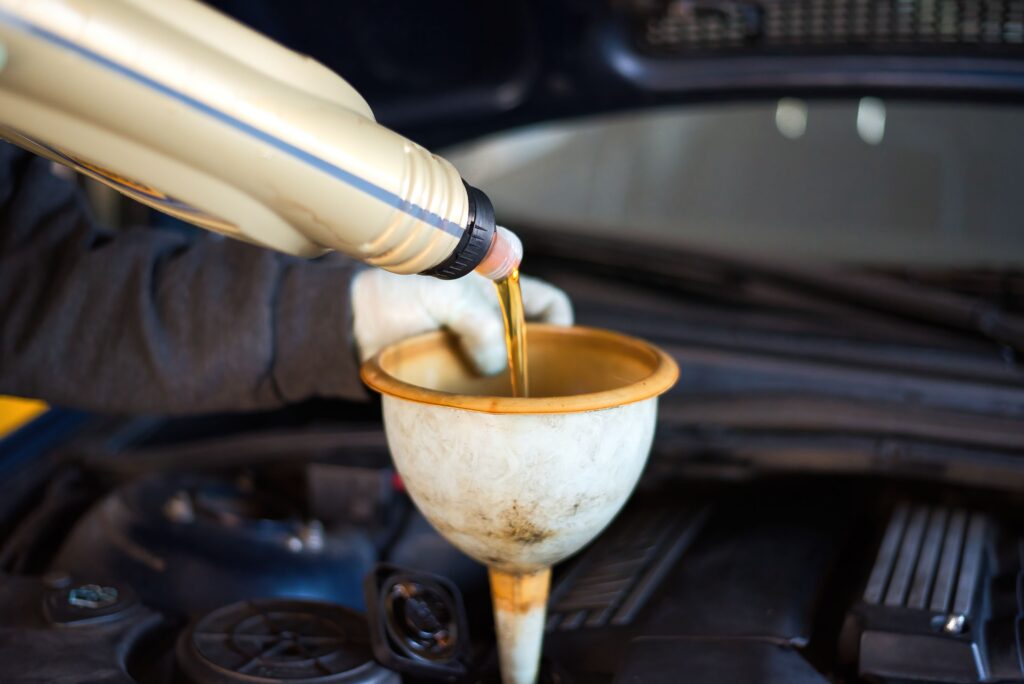
Step 4: Add Fresh Synthetic Oil
Fresh oil is added according to manufacturer specifications.
Step 5: Reset Maintenance System
The oil monitoring system is reset so the vehicle can track the next service interval.
This process restores clean lubrication throughout the engine.
Frequently Asked Questions
How often should synthetic oil be changed?
Most vehicles require synthetic oil changes every 7,500 to 10,000 miles, though this varies depending on driving conditions and manufacturer recommendations.
Can synthetic oil last a full year?
In many cases, yes. However, even if you drive fewer miles, oil should typically be replaced at least once per year.
Is synthetic oil better than conventional oil?
Synthetic oil offers better protection, improved performance in extreme temperatures, and longer oil change intervals.
What happens if synthetic oil isn’t changed on time?
Old oil can cause increased friction, sludge buildup, and accelerated engine wear.
Do all vehicles require synthetic oil?
Many modern vehicles recommend or require synthetic oil, but older vehicles may still use conventional oil.
Final Thoughts: Keeping Your Engine Protected With Synthetic Oil
Synthetic oil has become the preferred choice for many modern engines because of its superior performance and durability.
But even though it lasts longer than conventional oil, it still requires regular maintenance.
Knowing when your car needs a synthetic oil change helps prevent engine wear, improve performance, and maintain fuel efficiency.
By following manufacturer recommendations, watching for warning signs, and staying consistent with oil maintenance, drivers can ensure their engine remains properly protected.
In the end, a simple oil change is one of the most effective ways to keep your vehicle running smoothly and extend the life of its most important component: the engine.